
Published 23 Sep 2026
Loving Our LGBTQ+ Students
By Anne PharrA blog post Women Scholars and Professionals
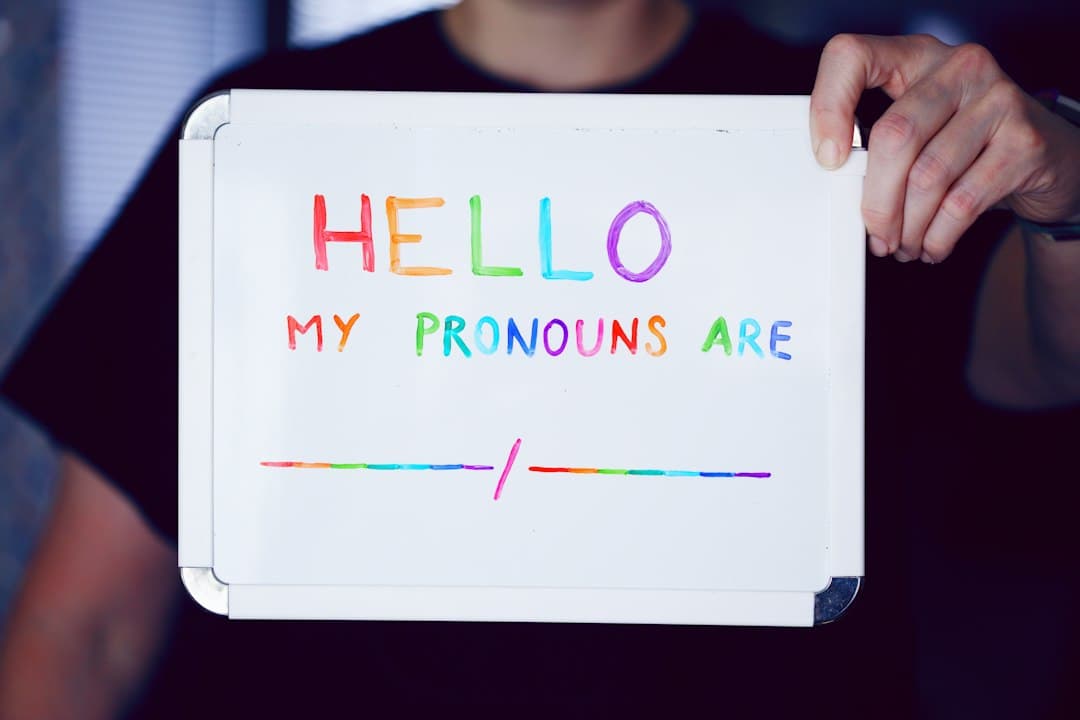
How can we exhibit the love of God to students amidst all of their varied life choices? Anne Pharr describes her journey of loving students unconditionally and the questions that arise along the way.
My first teaching job out of graduate school was at a small, Christian university. I’ll never forget a student who wrote about being banned from his parents’ home after coming out to them as gay. I didn’t really know how to think about the situation; what I did know was how devastating their decision was to him — and to his faith. My heart was broken for this young person, although I wasn’t sure whether God was pleased with my feeling compassion for him.
The decades I spent as a college faculty member meant interacting with many students and colleagues who identify as LGBTQ+. And every so often during my years of teaching, a few of these students would share some of their journey with me. Somehow, that seemed like a good thing — as if my students experienced me as a safe person. Yet it also felt like uncharted — and perhaps dangerous — territory.
“God hates the sin, but loves the sinner” was an oft-repeated phrase at the churches where I’d grown up. Furthermore, I had always been taught that as Christians, we must make others aware of God’s fierce displeasure with those who do not resonate with traditional gender identities — that to not do so is at least irresponsible, if not disloyal to people and to God.
Yet hearing how my student’s parents had disowned him raised a question for me: how could my student ever know himself to be loved by God if the people in his life — particularly Christ-followers, especially his believing parents — interacted with him in ways that reinforced a fundamental understanding of himself as meriting only rejection?
My encounter with this student slowly formed a desire for God to help me become a loving presence in the world; my intention has been to create what I hope are environments that, in welcoming all people, convey the truth that each person is hand-crafted by God and deeply loved.
Over the years, and as I’ve spent time in Christian groups that seem to convey a different message, this intention has caused me no small amount of unease. I’ve wondered again: How is God inviting me to practice my faith as I engage with people? Am I perceiving his guidance clearly? A minister friend once asked me whether my classes ever include students who are especially gifted. I responded by describing an adult learner whose study of art gave him a unique perspective when exploring literature. I told my friend about this student’s thought-provoking writing and delightful participation in class discussions.
What I didn’t mention was that the student is transgender. Experience tells me that this part of the student’s identity might be troubling to my minister friend. And I wondered whether my friend might question my values — or perhaps even the authenticity of my faith — if he knew the sexual identity of the student whose giftedness I’d chosen to highlight.
Partway through the semester with this student, he let me know he would miss a few classes due to an unexpected change in his living arrangements. Without my asking, he disclosed that his girlfriend, to whom he’d introduced me after a recent class, had been kicked out of her house after a sibling told their parents that she is transgender. My student was letting her stay with him until she could figure out what to do next. I encouraged him to check in with classmates about what he missed and asked him to let me know if I could help in any other way.
Strangely, on the very same day, another student in a different class came to my office hours to discuss her potential major. She, too, is a brilliant thinker and writer, which I reminded her of during our conversation. As we talked, she mentioned being married to a woman (information I’d not been aware of) and also referenced her upbringing in what she referred to as a staunchly evangelical family. I mostly listened, gave her one of my favorite books on vocation (Parker Palmer’s Let Your Life Speak), and thanked her for stopping by. A few days later, I happened to run into her again, and she proudly introduced me to her wife. We talked for a few minutes then parted ways.
Unable to ignore that these conversations occurred on the same day, I wondered again on my drive home whether my interactions had been pleasing to God.
As I talked with my spiritual director about these encounters, I recalled that none of these individuals had broached the topic of faith, also noting the college’s strict rules about faculty engaging in religiously-oriented conversations with students. And I pondered with my director whether it’s possible to reflect Christ’s love in meaningful ways without talking about him explicitly.
At the end of that semester, my student made a point of thanking me for the kindness I’d extended when he’d missed class to support his girlfriend. “It made a difference,” he said quietly. Though I haven’t seen the student again, I can’t forget him.
And I continue wondering what it looks like to participate in what Paul calls “the ministry of reconciliation” (2 Corinthians 5:18). I won’t be surprised if my understanding changes in the years to come.
In the meantime, though, my heart breaks to think I might do anything that could cause someone to believe God views them as reprehensible or an abomination (language I heard growing up).
And I pray that my interaction with each person I encounter, regardless of how they might identify, may invite them to know themselves as precious to their heavenly Father, deeply and dearly loved.

A wife, daughter, sister, and mother of two adult children and one son-in-love, Anne Lowry Pharr holds a B.A. and M.A. in English from Baylor University, a Certificate in Christian Spiritual Formation from the Renovaré Institute for Christian Spiritual Formation, and a Certificate in Spiritual Direction from the Companioning Center. After nearly two decades as an English and First Year Seminar professor at Pellissippi State Community College, she now serves on faculty for the Renovaré Institute and offers spiritual direction for individuals and groups.

A wife, mother of two adult children, and graduate of Baylor University, Anne Pharr has taught English and First Year Seminar at Pellissippi State Community College in Knoxville, Tennessee, since 1998. In addition to her teaching responsibilities, Anne served for eight years as program coordinator for the College's First Year Seminar course. She also collaborated with colleagues on the development of a college-wide initiative, Partners for Student Potential (PSP), which worked to deepen and broaden faculty and staff awareness of the challenges and strengths represented by at-risk students. Recently, she completed Renovaré's Institute for Christian Spiritual Formation. Besides enjoying family and friends, Anne's passions include heartfelt conversations, writing, music, reading, exercise, Henry the dog, and a great cup of coffee — preferably first thing each morning.