
Published 3 Jun 2014
Out of our Comfort Zone: Why Cross-Cultural Community Matters
Anthropologist Naomi Haynes reflects on the spiritual truths she has learned through living in another culture.
By Naomi HaynesA blog post Women Scholars and Professionals
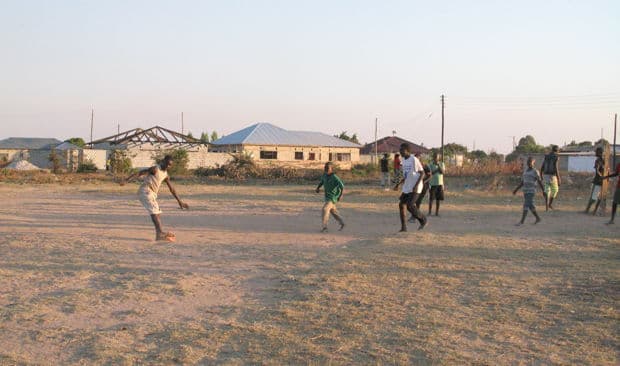
When Christians talk about their experiences traveling and living overseas, they often use the language of getting “out of their comfort zones.” As Brian Howell’s (2012) ethnographic study of short-term missions points out, this expression is something of a trope in evangelical circles, so much so that it has become one of the things people expect and even seek out when they travel overseas. Part of what we’re hoping for when we say that we want to get out of our comfort zones is, as Howell points out, that our travels will become pilgrimages. That is, we hope that in getting out of our normal routines and traveling to a place where we expect God will move in an especially powerful way, we will encounter him afresh and anew. I don’t want to dispute the notion that overseas travel can give us a new perspective on God, but I do want to suggest that travel has this effect primarily because it gives us a new perspective on ourselves. A different cultural context inevitably challenges the ways of living we accept as normal, and this process often yields a new understanding of where sin lurks in our lives.
I can say all of this because I have been out of my comfort zone a great deal. Over the past decade I’ve spent nearly three years living and working on the Zambian Copperbelt, usually for long stretches of time, first as a missionary and later as an anthropologist. While on the Copperbelt I’ve always lived with Zambians, sharing a home with families or other single women. This arrangement has unquestionably been beneficial, helping me learn to speak Bemba and giving me a solid basis for ethnographic fieldwork. I study Pentecostal Christians, and having a room in a pastor’s house has provided access to things I would never have seen otherwise, such as midnight exorcisms and the bridal training I mentioned in another piece for The Well. It’s also allowed me to form rich and lasting relationships, which would have been much more difficult had I lived separately from the people I’ve been trying to know and understand.
That said, sharing not only my life, but also my space and my time with people in Zambia has proved to be incredibly challenging. To give one example, in the neighborhood where I work I am regularly asked to stop and speak to people, to come and visit them in their homes, or to accompany them to see friends or relatives on the other side of town. Now, there are multiple levels on which this should not bother me. First and foremost, as an ethnographer, stopping and talking to people is my job. In fact, the opportunity for conversation, and especially for visits to people’s homes, has been hard-won, the result of a long and careful process of building rapport. Secondly, I know that visiting is central to social life in urban Zambia — I recently wrote a section on it for my book — and that a visit to someone’s home marks an important step in any relationship. This is particularly true in my case, as people I meet are often anxious about having a foreigner in their home, unsure of what I will eat or whether I will mind sitting on the floor.
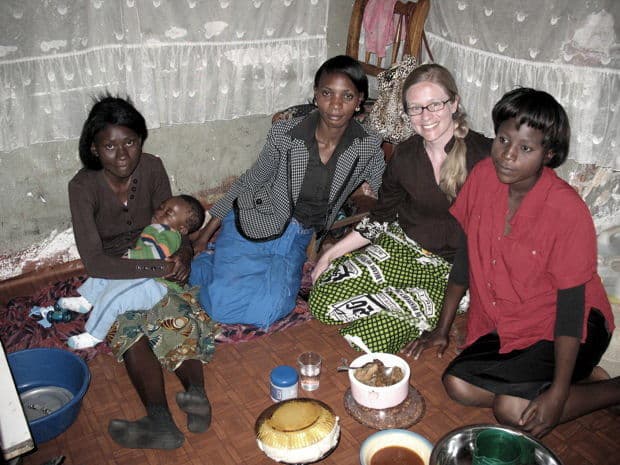
In the light of all of this, I should be overjoyed at the chance to speak to people, at invitations to come and sit with them at home. But the hard reality is that often I am not. You see, when I’m doing fieldwork I am working, trying to get things done and find out what I need to find out. The first things I bought upon arriving in Zambia for my PhD fieldwork were a clock and a day planner. I wanted to make sure that I didn’t waste the time I’d been given, which was funded by the grant money I’d worked so hard to secure. And there’s an extent to which those concerns were valid. However, there’s also a level on which my preoccupation with getting things done, rather than visiting the people who I had come to know in my neighborhood, was wrong.
References Cited
- Howell, Brian M. 2012. Short-Term Mission: An Ethnography of Christian Travel Narrative and Experience. Downers Grove, IL: InterVarsity Press.
- Walls, Andrew F. 2002. The Cross-Cultural Process in Christian History. Maryknoll, New York: Orbis Books.
Tags:

Naomi Haynes received her PhD in anthropology from the University of California, San Diego, and is currently a Chancellor’s Fellow in the Department of Social Anthropology at the University of Edinburgh. Her scholarship has examined the relationship between Pentecostal Christianity and social life in urban Zambia. She is a co-curator for anthrocybib, the Anthropology of Christianity Bibliographic Blog. In her spare time, she enjoys running, baking, and reading novels.