
Published 1 Nov 2018
Places Form Our Loves: An Interview with Ashley Hales
How can places shape us spiritually and personally? Ashley Hales offers some reflections as we discuss what she has learned through writing her recent book.
By Ashley HalesA blog post Women Scholars and Professionals

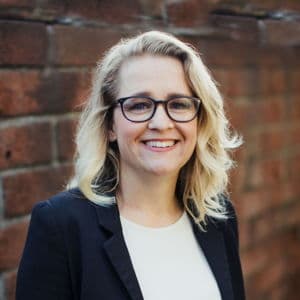
Ashley Hales has been a long-time contributor at The Well. With the recent publication of her first book, Finding Holy in the Suburbs, we took a few minutes to chat with Ashley about work, writing, and family life.
I don't think it was a vocational call away — it felt more circumstantial. I thought I’d get back into teaching, but we kept moving and we kept having more babies. It finally felt like — if I was going back to teaching, it was going to need to look different than I had anticipated. It was not going to be a tenure-track position in the English Department based on our life. Our family was not ready to move wherever I would potentially got a position.
There was significant, painful wrestling because I had put a lot of my identity into my PhD and a third of my life into finishing my dissertation. It made me feel special, unique, and smart to have the PhD. A move to being a stay-at-home mom and changing diapers felt like a crashing of identity. God knows what we need. Some of those years were really painful. It was hard to be obscure and to practice quiet disciplines of what it means to love people well and love my place well.
I feel like I've always written and always taught, whether in the church or a women's group in a Bible study or a speaking ministry or in a classroom — it's something that I've always done. It's a broadening of that perspective of calling. I'm always going to want to write and always going to want to teach and it's going to look different in different seasons and in different places, but those things are always going to be huge part of who I am.
I loved teaching and I loved my college literature professors. I thought that if I got to study books and read all day and then talk about it with people, it would be the best deal ever. It was that communal coming around books and seeing that words can actually transform you that I loved more than anything.
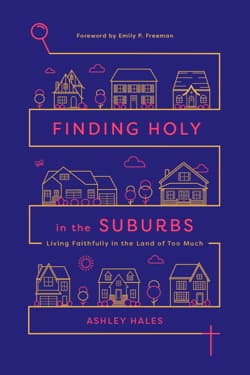
I wrote Finding Holy in the Suburbs because I had realized that part of my Enneagram 4 “special snowflake” identity was really wrapped up into place. My PhD was on Scottish immigrants to America in the late 1700s. The ideas of being in place or out of place or what it looks like to belong to a place are questions with which I've been struggling with for a long time, either academically or in my personal life. The impetus for writing the book was coming up against questions of: Who am I? Where do I fit? How do I belong to a space that feels really normal and familiar but also feels really foreign because I've been away? How do I love these people and this place when I want to dismiss the geography because it makes me feel better about myself?
I needed to work out this question: What does it look like to live here well and not simply be content with clichés about these people or this place? What surprised me most about writing the book was that I thought that once I wrote the book, I'd have my issues figured out. That I would find holy in the suburbs. But it's still hard. I still see all the ugly parts of myself that come to the fore. It’s given me some practices to learn how to love a place. I feel equipped to learn and practice how to love people and love a place even if it doesn't come naturally. I think I've learned some good disciplines about how to try to attach myself to a place for the wider good of the Kingdom rather than simply consume my place.
Part of what I learned in Pasadena (both times) was how to belong to the church and how to grow into an adult faith. That was the first place where I saw the connection between the gospel affecting how we live and how we belong to one another rather than just something we assent to.
Scotland helped us to learn what it looks like to be a foreigner and to participate well in a culture that's different from our own without being, “Hey, we're American! We need to do everything in an American Way!” We were out of place in a good way.
In San Diego, we were in charge of mercy ministry and we just had to go do it! We had to learn how to be awkward and bold, how to start things and let them fail. And that was a really great experience.
In all these places we learned how to be hospitable, to welcome people and throw parties. We've always tried to be present to people — that looks different in different seasons.
In Salt Lake City, we learned how to start things and the pain of long-term ministry, but also the privilege. We learned that this life in vocational ministry looks different than we thought. We learned it's not going to be all sunshine and roses. It's not that people come to faith and their lives are just going to be miraculously transformed.
Here in Orange County, we’ve done the hardest thing we’ve ever done: planting a church. We’ve seen the value of staying put and being in it for the long haul and trusting that God will be faithful to build his church because all of our great ideas and plans are not going to do it. I think we've learned how to lament and process loss and how to be who we are, wherever we are.
When you think of the academic tenure-track ideal, it's all about what you can get from the system. You have to jump through the hoops so that you are tenured and therefore valuable and have some sort of stability in your job. I think it's the same sort of heart attitude that we see in suburbia, but it looks different. The hoops are different that we’re jumping through, but it's still similar in that were using the institution or using our place for our own individual ends.
The challenge of living well in the academy whether you are teaching or a student is to know that doesn't make you more deserving of God's love, of other people's love or affection or attention. Your worth is not based on your grades, or how smart you are, or how many peer-reviewed articles you've written or monographs you've published. In the suburbs, that might be how much bigger your house is or how much money you make or how fancy your vacation is. All of these markers of success are not actually true indicators of worth. They're part of how God has made us, but they are not markers of belonging.
I heard a story about a Fortune 500 CEO who would vacuum the church carpet on Sunday mornings. I think those sorts of things are so important to get us out of our areas of expertise and just feel like normal human beings. Whether it's a scientist serving in a soup kitchen or the mom caring for kids all day going to an art gallery, we have to shuffle ourselves around what we're good at and put ourselves in awkward spots to learn something new. Those sorts of things can be spiritual practices that help us to see ourselves as human more than what we do and more than what we know, more than our success or beauty or whatever it is that we're capitalizing on.
For fiction, I love the Louise Penny mystery novels. Still Life is the first one and there are thirteen more. They take place in a little backwoods town outside of Quebec, Canada. I love the sense of place in her novels. Marilynne Robinson's Gilead is up there too as one of my favorites of all time.
For non-fiction, Wendell Perry, especially his Sex, Economy, Freedom and Community; Jen Pollock Michel’s Keeping Place. There’s one called Staying Put by Scott Russell Sanders. No Home Like Place by Leonard Hjalmarson. These are some of the books I walked with while writing my own book.
Tags:

Ashley Hales (PhD, University of Edinburgh) is a writer, speaker, and host of the Finding Holy podcast. She is the author of A Spacious Life and Finding Holy in the Suburbs and her writing has been featured in Christianity Today, Books and Culture, and The Gospel Coalition. Ashley is married to a pastor and the mother to four children.