The first hours in Haiti we drove over the mountains to Jacmel, a city about two hours south of Port-au-Prince. During the journey I pictured myself serving with the team and being transformed. I would hold a sick child, give clothes to a family, share Bible stories at vacation Bible school, and lives would change. A smile, a tear, a hug would break my heart and I would know why I had come. It seemed inevitable. On the other side of these mountains a whole new life awaited.
In Jacmel, trucks and motorbikes filled the roadways, and people carrying everything from tools to turkeys sidestepped piles of garbage on the sidewalks. We arrived at the Isaiah 61 Guest House and were soon out of the noise and dust of the main streets. This former hotel with its large bedrooms and cool spaces to relax made me think that I had happened into a retreat instead of a mission. I was glad to have this unexpected comfort, but wondered if a gated and guarded house would keep me safely out of the mission field.
After a restful night at Isaiah 61, the team headed out into the city. Down a few narrow, gravel streets the noise steadily became louder. The main road was alive with the sounds of motor bikes, cars, and taptaps (buses). Horns were a constant. Dust was kicked up from the dry pathways. We crossed this river of traffic and walked down a road with several plots of open land in front of us. Behind a newly built wall was the guest house at the Lutheran village where we would focus our work over the next week. We spent several hours scraping its newly cemented walls to prepare for painting. In the midst of the noise and dust of the metal shovels against rough concrete, there wasn’t much connection with people outside of our team.
Following lunch we gathered with members of our partner church in Haiti to hand out clothes and food in a tent city. The organized plans quickly eroded as we were surrounded by people who grabbed what we had to offer, barely taking notice of us. In the chaos, I focused on keeping the group safe and getting through the narrow corridors of tents. Every once in a while I looked at the people around me. How had they come to this situation? Would I act any differently than they if we traded places? But for the most part I was analyzing the situation, distancing myself. At the end of the first day, the promised change had not yet come.
I was hopeful that this change might enter my life the next day during vacation Bible school. Through the help of an interpreter I shared with over 200 children the story of the prophet Jeremiah’s call from God. I wondered if the kids were getting anything out of the story. Sometimes the interpreter even seemed to have difficulty finding the right words in Haitian patois to express what I was saying. Other team members returned with stories of children hugging them and wanting to play. I returned with a remembrance of the questioning and sometimes blank faces.
The week continued like this, with sporadic connections with kids and adults in the community. Yet even in the connections there was always a distance — we were blancs, white outsiders, with all the baggage that brings. I wanted to unpack my concern with the team, but also didn’t want to stifle the relationships they were forming with Haitians. They were playing with kids and becoming part of this community. So, I kept these thoughts to myself, along with a growing disappointment. Instead of drawing closer to the team, I was on the margins. This wasn’t supposed to happen.
In some respects, I was the woman at the well that Jesus encounters in John 4 — separating myself from the rest of the group. Maybe not because of some recognized sin, but separated nonetheless, and of my own doing. Like that woman I did not feel I was part of a group, neither the marginalized community of Haitians (Samaritans for her) nor the mission team (the chosen people of Jerusalem).
Later in the week I felt this disconnect even more strongly between myself, the Haitians, and the other team members as we handed out Bibles in a newly settled UNICEF village. Though people welcomed us at each house, I felt the invitation was mechanical. Were these people so welcoming because we were “powerful” Americans with something to give them? In such a desolate place, who wouldn’t invite someone in to enliven the day? We could only trust that God would work through our awkward, one-time interactions. However, based on comments from the rest of the team, I was alone in this view. Among the same houses, they had experienced people open to hearing God’s Word. It was life changing. In the midst of their excitement, I was more cynical than ever and seemingly further from change.
I had truly wanted to be transformed during this mission — to become more driven to share the gospel, to participate in service projects, to see and love people on the margins of society. But no. That “aha” moment never materialized. Instead, I stepped away into a safe zone. I was overwhelmed, perhaps even afraid, to be vulnerable during this short trip. Looking back, I was trying to work within my plans, not God’s. So I, like the woman, sat at the well at midday in a place where I knew no one would bother me. Surrounded by people, yes, but feeling very much alone.
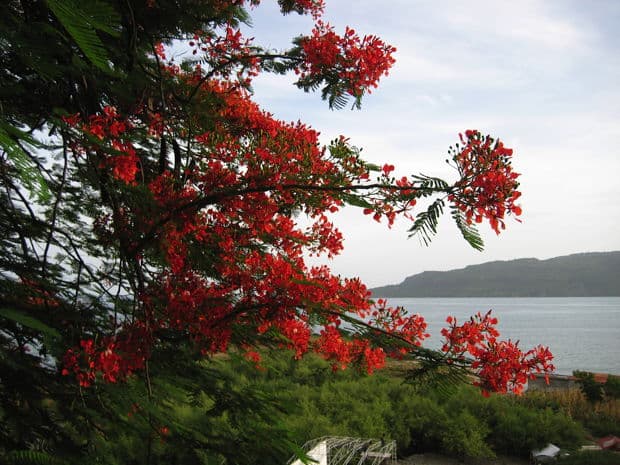
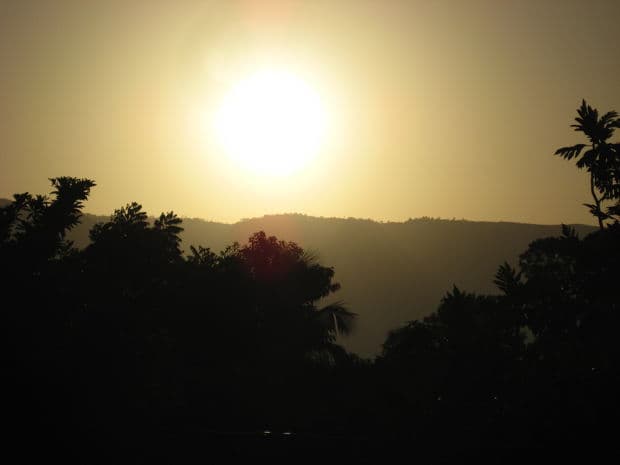
Yet, maybe I was not listening to how God was speaking in the midst of everything. Maybe I was looking in the wrong place for transformation. Instead of the people, the land had been changing me. Throughout the week we took time out from work to get a fuller flavor of Jacmel by visiting small art galleries, going to beaches, riding in the back of a pickup, hiking to a waterfall, and eating a meal outside of the pastor’s home. As I reflect, it was through these moments that I experienced the richness of Haiti. It was through these moments that I saw the beauty of the Haitian people, even if I didn’t connect with them in personal relationships. In opportunities to be in new places and walk in new paths I caught glimmers of God’s hope.