
Campus Resources for Access InterVarsity
We all want a place to belong, a place where we can be our true selves, relax, and be loved unconditionally. Often, for those affected by disability, it’s hard to find that comfortable and comforting place. InterVarsity groups can be that place.
5 Stages of Disability Awareness
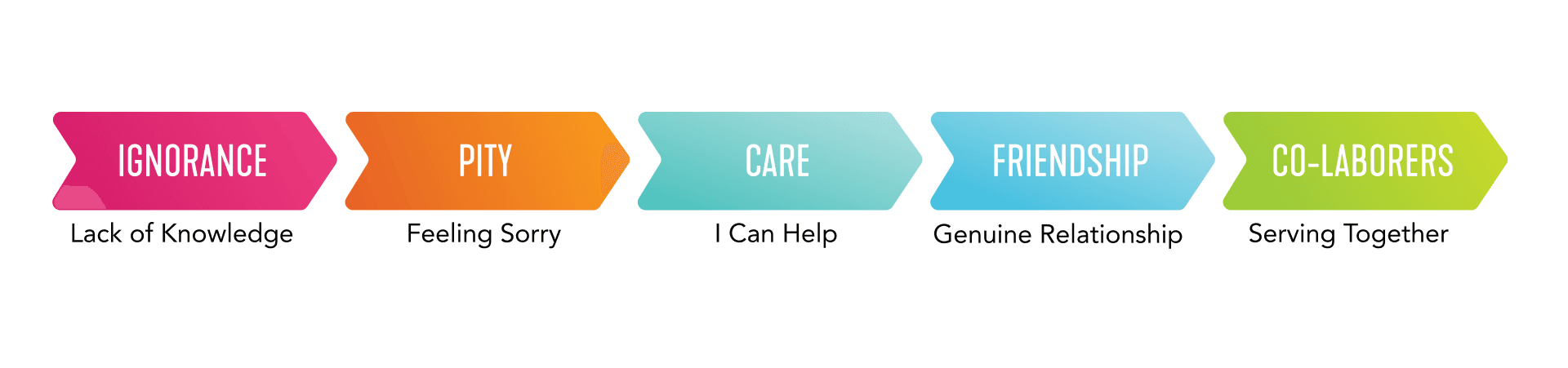
- Ignorance – Lack of knowledge (rude or negative opinions)
- Pity – Feeling sorry (good opinions but ignorant actions, they need healing)
- Care – I can help (good opinions and a heart to help effectively)
- Friendship – Genuine relationship
- Co-Laborers – Serving together
Steps to Starting an Access Small Group
- Ask questions and see if an Access small group is needed (Another option is to help your existing chapter be more accessible.)
- Pick a place that is accessible on campus to meet.
- Invite disabled students and allies to the group.
- Go through the Belonging Bible Study.
Nine Tips for a Disability-Friendly Chapter
These nine practical tips will help your chapter become a more welcoming and disability-friendly community.
- Provide a warm, friendly, welcoming environment.
- Greet people with disabilities as you would anybody else.
- Communicate, in words and actions, that people affected by disability are loved, belong, and are included in your InterVarsity group.
- Provide basic disability awareness training for staff and student leaders.
- Review basic disability etiquette.
- Obtain disability resources or invite a Joni and Friends representative or other disability resource person to do a training session.
- Improve accessibility. Make modifications where necessary.
- Imagine yourself in a wheelchair or having a difficult time with mobility and make changes as needed.
- If necessary, modify the access to the main entrance at a large group or small group event, or move to a new location.
- Provide serving opportunities for people with disabilities.
- God gives all His children spiritual gifts. Include people with disabilities in all areas as you learn their strengths and spiritual gifts, just as you do with all students.
- Provide disability-friendly materials as needed.
- For example, have large print or Braille Bibles available and print song sheets for those who are visually impaired.
- Consider providing assistive listening devices for the hearing impaired.
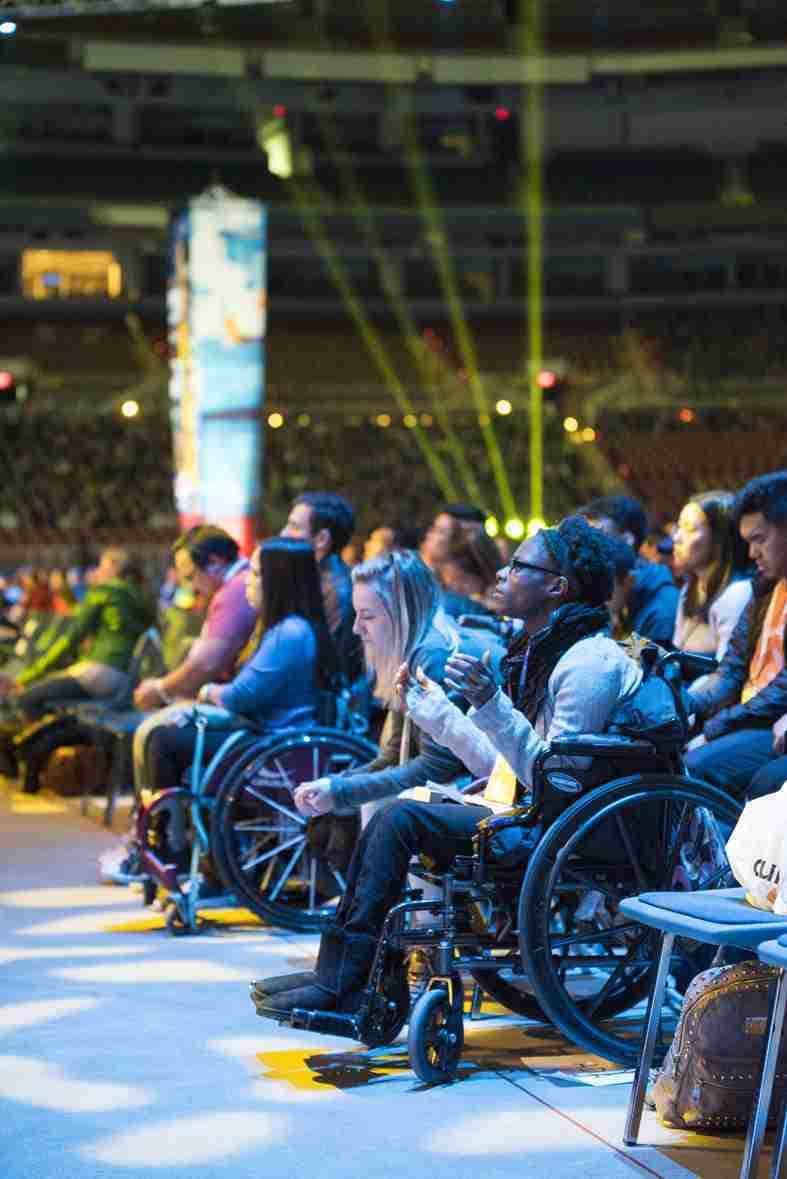
- Provide space in large group gatherings for wheelchair users.
- Shorten a few rows or take some chairs away so wheelchair users can sit with their friends.
- Provide a sign interpreter for people who are deaf or hard of hearing.
- Provide a mentor/friend for those who might need assistance.
- Someone can offer assistance during meeting times, as well as helping a student with disabilities get across campus if needed.
- General communication and interaction tips.
- Treat people with disabilities as you would anyone else.
- Be relaxed.
- Don’t get caught up with fancy terms such as “physically challenged.”
- In speech and in writing, put the person first, not the disability.
Downloadable Resources - 3x3
3x3 resources give you quick tips: 3 important facts to know, 3 common mistakes to avoid and 3 suggested activities to try on campus.
Welcoming Students with Disabilities
3 Things to Know | 3 Things to Avoid | 3 Things to Try |
|---|---|---|
|
|
|
Welcoming Students with Autism Spectrum Disorder (ASD)
3 Things to Know | 3 Things to Avoid | 3 Things to Try |
|---|---|---|
|
|
|
Welcoming Students with a Mental Health Diagnosis
3 Things to Know | 3 Things to Avoid | 3 Things to Try |
|---|---|---|
|
|
|
Share this post
About the authors
Kathlyn serves as a Campus Staff Minister at Rider University and Rowan College of South Jersey in New Jersey. She first got involved in InterVasity as a freshmen at Rider University where she currently serves. She has a passion on helping students get the accommodations they need to grow closer to Jesus no matter there ability. She lives in Morrisville, PA with her husband and son.