
Published 30 Jan 2026
7 Deadly Sins of Women in Leadership: A Discussion Guide
Did you know that women’s internal attitudes and habits can sabotage their own leadership? This book will help you overcome unhealthy mindsets so that you can lead well.
A blog post Women Scholars and Professionals
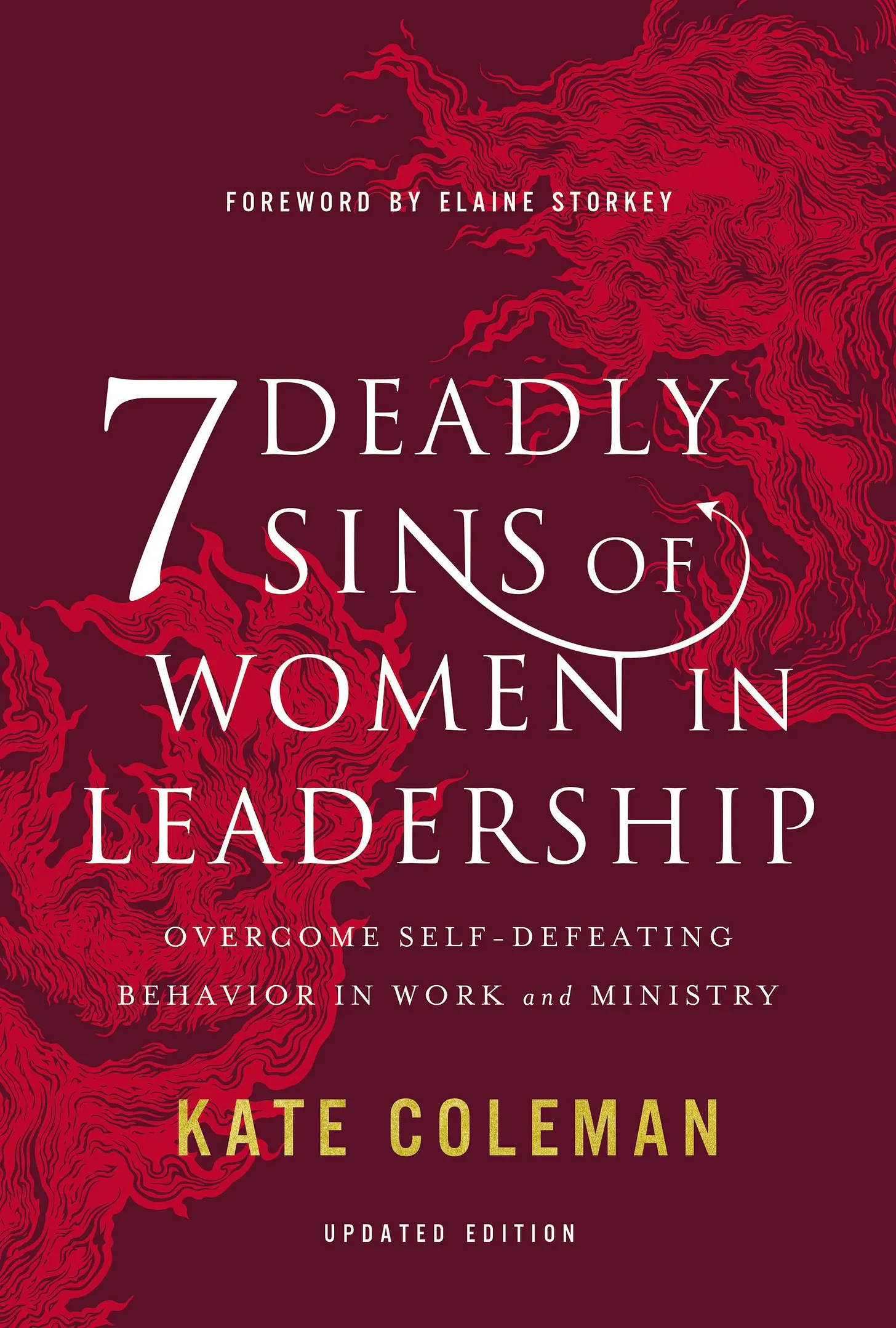
Do you have hangups about your leadership? Kate Coleman addresses barriers within women that negatively impact how we lead. She describes seven common ways that women undermine their own leadership, sometimes unknowingly. Kate’s combination of theology, research, anecdotes, personal insights and practical tips will help you to overcome the limitation you have placed on yourself and lead from your rootedness in Christ.
Rev. Dr. Kate Coleman is the founding director of Next Leadership, an organization that seeks to transform leadership by equipping leaders in the public, private, voluntary and church arenas to serve well in the world of today and tomorrow. Rev. Dr. Coleman’s “firsts” include being the first black woman Baptist minister in the UK, the first black woman President of the Baptist Union and the first black female Chair of the Evangelical Alliance Council. She has had the distinction of preaching at the opening services of both the Conservative and Labour Party Conferences. She has worked with the United Nations in creating leadership development curricula for women leaders. In 2021 she was recognized as one of the top 25 Women Racial Justice Champions by Churches Together in Britain and Ireland. Kate was born in Ghana and called into leadership soon after she became a Christian as a student at Southampton University where she studied biochemistry and pharmacology. She earned her doctorate at the University of Birmingham.
Her contributions have been featured in the mainstream press, radio, and TV. She is a Certified Stakeholder Centered Coach and a Fellow of the Royal Society of Arts (FRSA).
Discussion Guide
7 Deadly Sins of Women in Leadership: Overcome Self-Defeating Behavior in Work and Ministryby Kate Coleman
Part 1: Introduction & Overcome negative self-perceptions
Are women poised to flourish as leaders today — where there is a need for traditionally “feminine” traits like consensus and collaboration, rather than command and control?
What images come to mind when you envisage a leader? Do you picture yourself? Is it easier to think of yourself as a leader if you are an academic (because you an expert in your field) rather than a woman in other professions?
Do you see good female difference that women preachers and teachers display — whether in classroom settings, administrative meetings, sermon delivery or leading a campus fellowship? How about in yourself — are you different in your approach from male colleagues in a way that adds something good to the mix?
How do you respond to the broad picture laid out by the author listing the diverse experiences of women — e.g. the leadership questions we raise are those of white middle class women vs. a wider context of black women in the American past, South Asian women today and snapshots of politics from South Asia and Europe? Anything that particularly struck you?
The author talks about women’s disposition to wrestle with what we think we are not, rather than celebrating what we are, holding on to familiar but faulty self-understandings. How much does this “sin” resonate with you? Do you recognize imposter syndrome within yourself?
Reflect on an instance you have “shrunk to fit” others low expectations of you. Or struggled to escape from being shrunk to fit by others. How has this experience impacted you, for better or worse? How did/can you grow in confidence?
Do the exercises on pages 27-31 designed to adjust our self-talk. How have you been encouraged to be confident in your leadership?
Theological Reflection
A) Do you see yourself from the perspective of Creation theology — i.e. that you are included in God’s Creation mandate? (page 20)
B) Have you considered that our limiting self-perceptions are the result of sin/the Fall? The author says that sin plays out differently in men and women.“Temptation then is not so much the titanic desire to be like God, but is in weakness, timidity, weariness, not wanting to be what God requires of us” “Limiting self-perception may lead to a misplaced quest for significance through intimacy and the approval of others.” (page 22)How do you respond?
C) Are there any parts of Genesis 1-3 that stand out in clearer light to you from the author’s exposition?
Part 2: Establish Boundaries & Develop a personal vision
“God does not violate our boundaries but refuses us to violate his.” (page 37) How do you respond to the idea that boundaries come from God?
Do we resonate with the feelings described when our boundaries are breached? How about the reasons why we may allow boundarylessness? (page 20)
Consider the aspects of self-leadership that Kate Coleman encourages us to pursue — self-identity, self-acceptance & self-worth, self–reflection, self-awareness and self-management. What was something particularly eye opening or relatable for you? Is there a step you want to take as a result?
As you observe the tiered support group that Moses had, how about your own networks of support? How will you develop a support group of mentors, peers and mentees?
“Vision is our unique God given view of a future we could potentially facilitate into being.” (page 69) As you reflect on your own vocation, gifts and passions — what is the future God has invited you to imagine and work towards?
What are some ways you may have seen diversions from true vision in your own life, or in others — whether imposed vision, borrowed vision or wishful vision?
Consider the author’s insights on how to discover one’s personal vision. How have some of these ideas shaped your vision already? Are there ideas you are being drawn to now? (page 83 - end)
“God’s vision for your life may be you shaped, but it will inevitably be God sized” (page 85). As you look ahead to what God wants you to accomplish, how is this truth giving you new energy?
Think of one area of your life where you need personal vision — where are you now, where would you like to be in the future, and how will you get there? Use the guide on page 93 for this exercise.
Part 3: Cultivate a healthy work/rest rhythm & Stop being a people pleaser
How do you respond to the idea that women find it difficult to pause because we (and others) don’t recognize that we are always working — whether we are at our job, volunteering, homemaking, or caregiving?
Are you in a situation where you are susceptible to burnout? (checklist on page 105)Are we experiencing symptoms of burnout? (checklist on page 106)What do you need to take care of yourself?
Are women unable to acknowledge that our work is “very good”? What are some things you have accomplished that God smiles upon? Begin making your “it was very good” file.
How do you feel about abandoning the idea of “work-life balance” for “work-life rhythm”?What ideas/practices about Sabbath, rest and recreation did you find helpful?
How do you respond to the fact that God is relational? And examples of people in the Bible who had good relationship networks?
In what ways do you see your relational leadership style as a good gift for those you lead? (And if you don’t fit the stereotype — how can you be more intentionally relational?)
“…women are … stereotyped as ‘friendly’ … people expect women to be ‘nice’, gentle, and less aggressive and less aloof than men.” Do you agree with this statement?As you reflect on how women exercise leadership, have you observed backlash women face when they fail to meet these expectations?
How do you respond to the idea that women’s need for approval/desire to be liked undermines their own effectiveness as leaders?
What strategies do you use to create healthy emotional distance when making difficult decisions? (page 150)
How can we be good leaders for the men on our teams?
Where do you want to take your people? How will you get there?
Part 4: Confront not collude & Be intentional with your inner circle
Kate Coleman lists the following issues faced by women in leadership and how they contribute to women avoiding conflict or not being assertive enough as leaders.
Unique contributions of women are often undermined.
Ideas about leadership are largely masculine unless exercised in “feminine” domains.
Women who don’t conform to expectations at best viewed as exceptions, at worst problems.
Similar leadership styles are viewed differently in men and women — the man is being tough and strong, the woman is being controlling and aggressive.
Strong female leaders perceived as unfeminine
Women considered as feminine thought of as weak/unsuitable for leadership
Women often innovate distinctive leadership styles, these changes might be unwelcome.
We are still figuring out what women’s leadership looks like/ how it may be different from men’s/what benefits it brings to the table.
Women expected to be supportive and considerate as leaders, thus toughness not welcome — viewed as control/lack of compassion.
How do you respond to the above statements? What have you observed/experienced
What kind of reactive responses to conflict do your recognize in yourself? (e.g. Ostrich, Chameleon, Bull, Snake) Or, do you usually respond well to conflict at work?
What new ideas did you learn about handling conflict well? What are some ideas you have already tried? What do you want to “re-incorporate” to your leadership?
“By employing self-leadership to our family struggles, plans, goals, hopes and dreams we could approach many of our challenges with less angst, guilt and self-doubt.” How do you respond to this idea?
Are there lessons from your work and professional life that you can use to manage your home life?
“People close to the leader affect the leader’s state of mind and emotional well-being. Our family dynamics impact how we feel about our leadership and the way we express it in and out of our home.” What do you think?
“Abandon the notion that personal contentment can only be formed if people and situations around us change. Happiness emerges only as we attempt to think differently about the people and circumstances around us.” How can this mindset help us?
How do you respond to the value given to families in the Bible? What are your observations of the different configurations of/ dysfunction within households in the Bible? What about our own? What is a dysfunction that you would like to see less of in your family? In what ways have you noticed idolatry operating in families?
Jasmine ObeyesekereNovember 1, 2025