
Published 9 Apr 2014
A Banker on Budgets: An Interview with Patricia Snyder
Banking professional Patricia Snyder offers her wisdom on life choices and money management in this interview with The Well.
By Ann BoydA blog post Women Scholars and Professionals

After meeting Patricia at a conference last October, we became very interested in the idea of sharing some of her knowledge and experience with readers at The Well. Patricia holds the position of Senior Vice President at Amegy Bank, a regional bank in the Houston, Texas, area, where she is responsible for loan decisions, handling customer relationships, and loans and deposits. We hope you enjoy listening in on the conversation we had with her about life choices and money management.
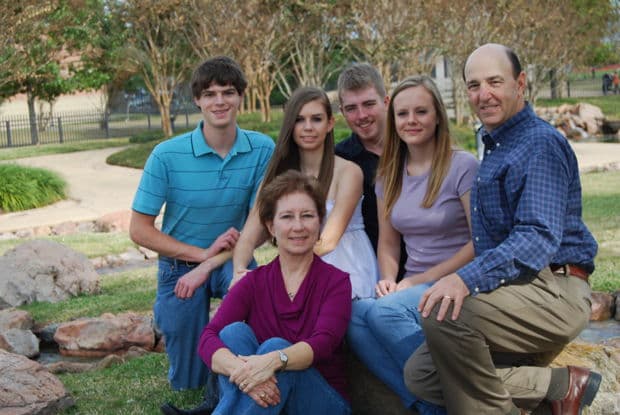
The Snyder family (with a family friend).
You know, straight out of college, with a psychology degree, I had a very limited income. I learned early on about the need for budgeting. I remember being surprised a couple of times that I'd run out of food in my pantry, but it turned out to be payday. That was a great thing to learn when you're twenty-one. Payday does come around, every two weeks. [Laughs]
First of all, you need to sit down and make a budget, including all of your categories. As mundane as they are, you need to put in those lattes and midnight pizza deliveries. And that needs to be in the form of entertainment or food, but you have to group those into broader categories, being careful not to kill yourself with details. I learned to give up my budget category of Hallmark cards as the detail drove me crazy. You have to give yourself a little bit of grace.
It takes a tremendous amount of discipline. You know, when I went back to graduate school, I had a certain amount of money saved, and I had to live on that money. So I just did the math, figuring out how much money I had saved and I had to make it last for two semesters or ten months, until I could work the next summer to raise more money, and then I took out a loan for the second year of grad school. It takes tremendous discipline, but starting out with the math is always very helpful: how much do you have to live on?
As I matured a bit and married at 26, the priest in the church where my husband and I were married did a great deal of teaching about tithing, giving to the Lord. The first line on our budget is our tithe: how much we give back to God. So I can't talk about budgeting without talking about that category of what you're giving back to God. It needs to be up at the front of your budget.
I believe that all you have and all you are belongs to the Lord, and that doesn't mean just your gifts, but also your financial assets. You can use those for His purposes, but it keeps your perspective in place, when you realize that all you have is really His. Maybe that adds to some of the discipline, the challenge to remember: "This is all God's, and yet he's given me this amount to live on. How do I live on that in order to honor him?"
That's right. Each part. You might have someone that is very strong about their quiet time, very disciplined there, or very faithful about church attendance and fellowship, but they should be equally disciplined in using God's resources in the way that He intended to have them used. That is so critical to me, that when you're doing a budget, your income comes first and your tithe goes second. And then you can start to look at rent, and food, and utilities, etc.
Right. Because if it's not the first thing, then it will not happen. And it's amazing to me; I see financial statements for many individuals in my job. I see many very committed business owners who are committed Christians who tithe on their personal statements and tithe from their business statements. I have gone to loan committees and have been able to say, "This person is the kind of person that is so committed, that you see on his financial statement this gift to his church." It tells you a lot about a person, if they're that committed to what they believe.
Number one: savings. Build a cushion. It may be fifty dollars a month at this point in your life, it may be two hundred dollars, someday maybe more. But there needs to be a savings cushion.
Secondly, it's absolutely critical to build credit and that needs to be thoughtfully and carefully done. It's very important, as a young person is developing their career and their life, to establish credit so they have the ability as they need to, to borrow money, to obtain the best insurance ratings, and those sorts of things. So build credit, strategically and thoughtfully.
Thirdly, I believe that it's important to use credit only for appropriate purchases. Borrowing money to buy a house or a car, if it's an appropriate amount to spend based on income, that's a good use of credit or debt. When I see people using debt to go on vacations or buy furniture or other things they want, that's not an appropriate use of debt. Types of loans that are reasonable and good are usually for things that are going to last for a long time. I know when I graduated I had to go out and buy professional work clothes, and I put those on credit cards. That’s an appropriate thing to do. But I didn’t go out and put work clothes and furniture and a new car on credit at the same time. There’s a right balance and a right quantity of credit to have.
In the banking world, we look at people’s credit. Having poor credit can have a major impact on you. Monitoring those credit cards particularly as you're in school is critical. One or two cards carefully used are excellent for building credit. But beyond that, you can get underwater pretty quickly.
I also like to ask people to think about the quantity of student loans they obtain. I've seen a number of students who go to expensive schools to prepare for jobs that are low-paying. I had a doctor tell me that when he graduated from medical school, he had 300,000 dollars in student loans. But he was able to pay it back in about two years, because of his income. The difficulty comes when a student has a ministry, has a passion for that ministry--and that's a fabulous thing--but incurs a tremendous amount in student loans, whether that's a hundred, hundred-and-fifty, or two hundred thousand dollars, preparing for a profession that you know is not going to generate a tremendous amount of income. Is there a less expensive school you could attend if you need to use student loans? Could you go at a slower pace? Can you work and go to school and not take out as much in student loans? I caution students to balance the amount of student loan debt they take on with their future earning ability.
It's important to balance what the total student loans are going to be with your future earning power. And understand that relationship before you incur the debt. If it's worth it to you to go to that expensive school and know that you're going to be in debt for the next many years, having your income going to paying off the debt and delaying other purchases, then you do that intentionally and with the understanding of how you're going to pay the loan back.
The last thing that I see for recent graduates is that many folks want to buy that first house so rapidly. They tie themselves down with a mortgage early on, and then they maybe need to learn the lesson that I did, making sure I had enough extra cash resources to have those kinds of loans. When I finished to graduate school, I had a little higher income than before and I made a decision to invest in a piece of real estate. I purchased a rental property that was part of a government program so that I was assured of receiving a monthly check, because the government was providing subsidized housing. The program changed, and I no longer had that income. It was a struggle. I had to work and make those payments and get it paid off, or sell the property, which I was eventually able to do. That was a lesson learned for me to have excess income in order to repay my obligations.
So the three financial problems I see the most for recent graduates are excessive credit card debt, having student loans that outweigh future earning potential, and getting into a mortgage before there are enough savings to support it (or buying too large of a house for what they’re really able to afford).

You know, Ann, realistically, when you're paying for school and you're living on a graduate student assistant's salary, how much saving are you really going to be able to do? If your employer provides a 401K plan, always access that. Oftentimes they will match funds that you invest. Do as much as you can early on, even if that is only twenty dollars a month, starting early with a small amount of money every month. That will grow until you retire, you just really can't belittle that. So start out with what you can do, with the understanding that you may not be able to do much until after you've finished your education. But the first thing I tell the young folks that come into our bank training programs is to be sure they're participating in the corporate 401K plan.
No amount of money is too small to start saving. And the discipline of putting that line item on your budget, of saving, even if that's twenty dollars a month, to have that automatically transfer over into a savings account, is invaluable.
Now, the rule of thumb is that you have six months of emergency funds saved. I know, you just don't have the luxury of that when you're in school and graduate school and immediately out of school. But that's a goal that all of us should try to obtain as quickly as we can, to have that cushion. Then also begin that retirement savings early on, since it grows and builds over time. It's very critical as government programs change, like social security, and companies no longer provide pension plans, that people understand that they will have to provide their own retirement funding. I guarantee that the social security retirement age today is not going to be the social security retirement age it will be when your readers need social security.
You know, financial planning for yourself is different from financial planning when you're part of a couple. I would just say, before marriage it's really critical to make these decisions jointly about budgeting and how much you're going to give to the Lord, and how you're going to spend your money. It’s a wonderful opportunity to go through pre-marital counseling and talk about budgeting together.
A note from the interviewer
I loved talking with Patricia and hearing so much good, practical advice about finances. I thought it might be helpful to include a few links to resources that I have found helpful in my own journey of managing money. Do you have other resources you’d like to recommend? Please tell us about them in the comments!
How I Budget
I appreciate Tsh Oxenreider’s clear overview of budgeting in these articles:How I BudgetThe Basics Behind a Budget That Works
Budgeting Software
There are lots of tools and services you can find online to help you create a budget. Here are a few that have been recommended to me, and you can find a few more at this article.
MintPear BudgetYou Need a Budget
How to Stop Living Paycheck to Paycheck
In researching this interview, I happened upon this article that offers good, basic steps for stopping bad spending habits.
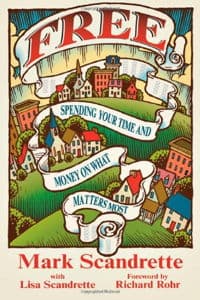
I’ve enjoyed the spiritual vision and practical advice about finances in this book by Mark Scandrette, who makes the case that budgeting is truly an issue of lordship. Christopher Lee touches on this aspect of the book in his article “Freedom in Finances.”
Tags:

Ann is the Women Scholars and Professionals Podcast host and the interim editor for The Well. She has worked for InterVarsity Christian Fellowship since 1997, exploring her interests in community, spiritual formation, and writing. Ann has a BM in Music Education from Northwestern University and lives in Chicago, Illinois with one husband, two spunky teenage daughters, and three snuggly cats. You’ll often find Ann baking sweet treats in the kitchen while listening to a podcast or audiobook.