
Published 21 Oct 2013
An Interview with Liesl Gibson
With an eye toward social responsibility, Liesl Gibson shares her thoughts on clothing and fashion.
By Liesl GibsonA blog post Women Scholars and Professionals
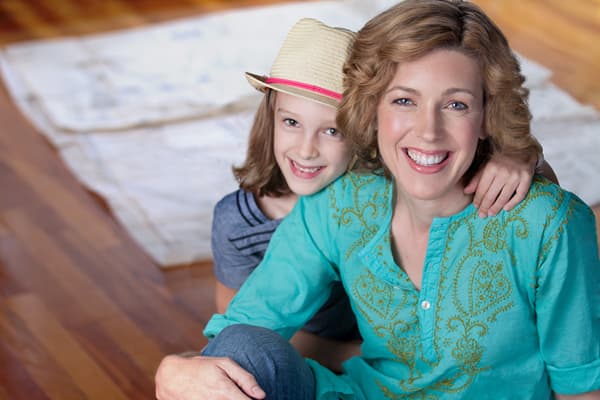
Clothing is a topic we haven’t addressed at The Well, although others in academia have. Natasch Chtena writes Appearances Matter (“Sorry guys,” she says, "I have to say upfront that this post was written with female readers in mind!”) for Inside Higher Ed, and refers to the study, “Effects of Graduate Teaching Assistant Attire on Student Learning, Misbehaviors, and Ratings of Instruction.” And in light of the Bangladesh factory disasters of 2012-2013, we were made more aware of the tragic working conditions for many of the men, women, and children in the garment industry, particularly required for fast fashion (“fast fashion” is the term used in the industry for the practice of translating runway designs quickly and cheaply into trendy clothing consumers can buy at low cost — clothing meant to be worn for a season or two and then discarded). How do we respond as Christians and as women concerned for others in this world?
Although she is not in academia, I decided to ask the person I know closest to the fashion industry, Liesl Gibson, founder of Liesl + Co., if she would comment on some sartorial matters for our audience at The Well. Liesl did her undergraduate degree in graphics design and early work in publishing and finance. Returning to school, she earned a degree in fashion design from New York's Fashion Institute of Technology. Before having a child in 2005, she worked as a designer for Tommy Hilfiger and Ralph Lauren. Liesl lives in Manhattan with her husband Todd and daughter and commutes daily to her studio in Brooklyn.
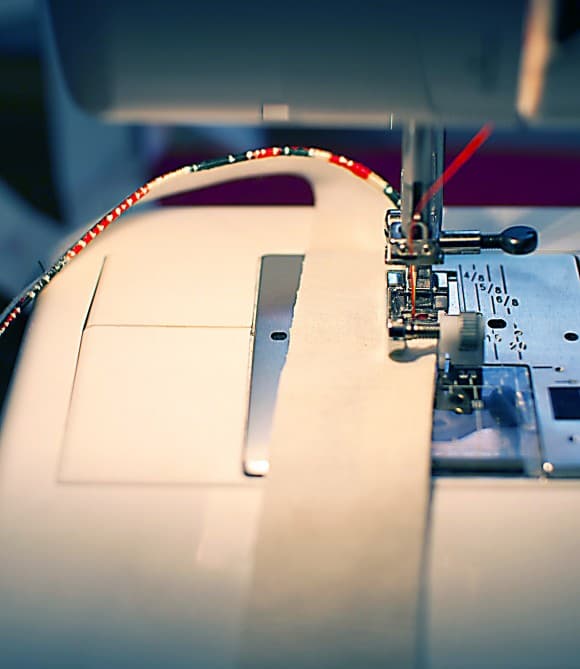
I had classes in pattern-making when I was in school for fashion design. Of all the classes that I took, that was the class that most opened my eyes to the whole apparel process. There are two primary methods of making apparel. One is draping, where you take fabric and manipulate it on a dress form then make a pattern out of your draping, and the other is flat pattern making, where you develop a three-dimensional pattern on paper. I really enjoyed the draping classes, but it was that first pattern-making class when the teacher started showing some of the things you could do with a flat pattern that opened my eyes and was just such a revelation to me.
It was just such an amazing concept that you could do all these amazing things with one basic pattern. That really intrigued me. But I wasn’t a professional pattern maker. You can go to school for pattern making. That's a very different skill set than being a designer. So when I was in school, I was taking pattern making for designers to give me a basic overview of what pattern making is so that I could communicate with a technical designer. But when I started Oliver + S there was still a lot to be learned on my side.
Yes! She’s an amazing seamstress. I had an interest in clothing at a fairly early age and my mom was great because she was so patient and willing to work with me. If I saw a pattern that I liked but wanted a different sleeve or a collar added, she would figure out how to make those changes. She really nurtured that interest and made this all possible for me. And my Grandma worked in the fashion industry and has been a big source of inspiration for me as well.
Yes. It seems superficial, especially in light of larger issues, I know. I’ve struggled with that a lot. Where I've landed on that topic is that we all present ourselves to the world. How you dress has so much to do with first impressions and with what you're saying about yourself to other people. You know, I think especially as teenagers, we try on a lot of different personas to sort of figure out who we are and how we want to present ourselves. And I think that's very important as Christians, too, that we're presenting ourselves as people who are engaged with the world, and people who are interested in what's going on. It has to do with how people are going to perceive us. And so it's not simply a superficial thing. It truly does have to do with how people are going to accept a message that we're bringing them as well. So there's a lot that comes into play.
Absolutely.
No, I think that’s changed a lot over the last twenty or thirty years. When I was growing up and my mom did a lot of sewing for me and my four younger sisters, she sewed largely to save money, because clothing was expensive. And I remember that change — I think I was in high school — she and I were shopping one day in a department store. And I fell in love with a dress. I think it was an Esprit dress. Esprit was all the rage back then. And my mom looked at it, and she said, "You know, I can't make it for this price. We might as well buy it instead of making it." And to me, that was the time when everything changed in the fashion industry.
And I think it's just gone down from there. As a society, we tend to be so price-conscious. And I can understand that; we want to be saving money and we want our hard-earned dollar to go as far as it can. But it's come to the point where I don't see buying cheap clothing as saving money. So often we’re chasing trends that are not going to last very long. We're looking at so much apparel as being disposable. We say, "At this price I don't even need to wear it that many times before I can get rid of it because it's so inexpensive." And in the end we actually end up spending more money on bad clothing than if we were buying good quality clothing and buying less of it and holding onto it. We’re wasting resources when we accumulate or churn through a lot of clothing.
I think there's a contingent of people who get that. You always hear about how French women are such beautiful dressers, and how they have such a sense of style. They don't tend to buy cheap. The chic French woman tends to spend a lot on a piece of clothing. But she doesn't buy a lot, and she might still buy it on sale to save money. But she holds onto it and she wears it, and she wears it in a lot of different, creative ways. And that is really the key. It’s not about buying a lot and buying it cheaply. It's buying what you love and buying what's going to last. If we're not all just buying and disposing, that's going to change everything.
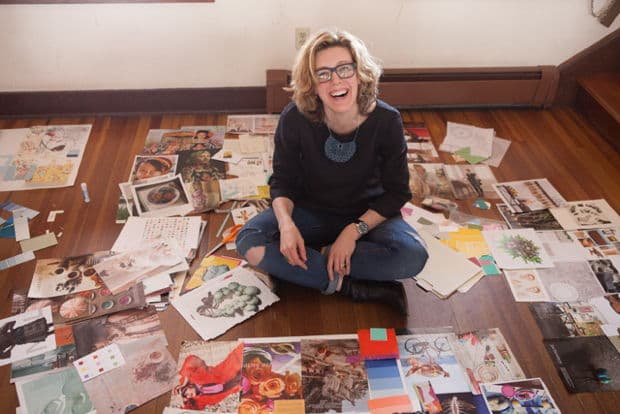
Photo by Linda Winski.
That's actually not my idea. I know a number of people who say that. Over the last five, ten years, we've started to become more aware of where our food is coming from, and what's in our food. And I think it's very similar here. The Bangladesh factory collapse — and I think Elizabeth Cline says this too — really felt like the breaking point. You can almost compare it to Sandy Hook and the whole gun situation, where a lot of people have said, "Okay, enough already. We need to do something about this." With Bangladesh and the factory collapse, people are saying the same thing, "This is terrible. I don't know where my clothes are coming from. I don't know who's making my clothes and what they're getting paid for it, and I need to know more about it."
The consumer is starting to say, "I want to have more control over how my clothes are made." I don't think the answer is necessarily taking all production away from other countries. There are people there who need to make a living. But I feel it's the first step when people are saying, "You know what? I really do need to know more about this topic. And I'm going to start with what feels easy, by buying something that I know is made in the US."
Yes! It's amazing. When Todd and I moved to New York twenty-two years ago, I still remember the Garment District and walking around and seeing — you still sometimes see the photos — the guys pushing the great big racks full of clothing. That was still happening in the 90’s, to some degree. And now you never see that anymore. Never, never, never. There is so little production happening in New York now.
There is not an easy answer. That has to be a much bigger conversation. Elizabeth Clene, on her website, has a list of companies who are meeting some of the criteria for responsible manufacturing. I think that's a great place to start. Beyond that, I think there are some things that we can do as consumers. We can contact those companies we shop with and ask for more transparency. I buy a lot of my basics — unfortunately I don't have a lot of time to sew for myself — at J. Crew. And I recently went looking and saw that J. Crew has posted a social responsibility statement on their website. It certainly doesn’t answer all my questions, but it’s a good start.
I think we, as consumers, need to make it clear to these companies that transparency is important to us, and we really care about where our clothing comes from and who made it. I would feel more comfortable buying clothing if I knew where it was being made and who was making it, and how the workers are being treated.
I worked for Phillips-Van Heusen for a number of years, and there was a man there who worked on our floor, just one guy in a little closet of an office who was in charge of all of their factory compliance. He would travel all over the world to look at their factories and make sure that they were meeting human rights regulations. That was about ten years ago. At the time, I remember being quite impressed that the company was taking that responsibility but also wondering how effective one person could be. I also don't know that a lot of companies did that. But, one guy, how many factories are they using? He can't be there all the time. You know, asking a company to be as transparent and responsible as possible is a good first step. It’s going to be a long process, and we all need to play a role in making changes to the whole system.
I think one of the things that we can do is just start by buying less and to hold onto what we're buying, even if we’re unable to determine the specifics of its origins and background. If we're just not part of the cycle of throw-away clothing, we're at least starting a better practice. It shouldn't feel so overwhelming that you don't know where to begin. We can at least stop buying so much and see what develops from there. And let's put some pressure on our government, on the stores where we're shopping, and on each other to become part of this discussion. As a group, I think we can make those necessary changes. I’m already seeing many companies starting to really focus on these issues, and it’s really encouraging.
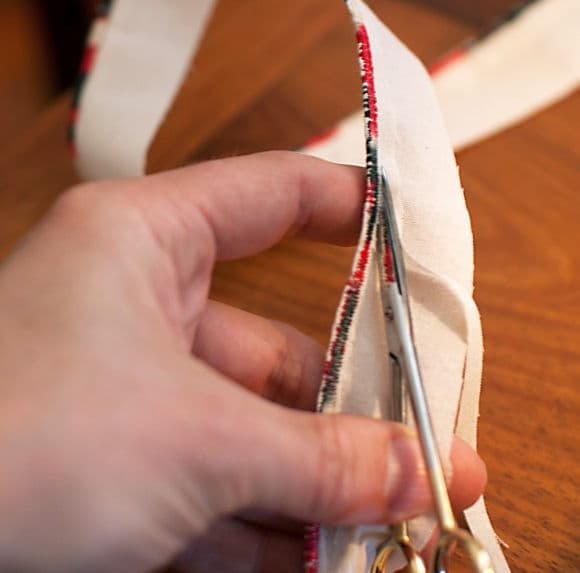
I don't think there's such a thing, really, as timeless fashion, but I try to make our fashions as timeless as possible. I have clothing that my mom sewed for me and my sisters that my daughter wears. There's something about that that just means so much to me. When I'm designing, I want it to be contemporary. I want it to feel like it's now. But I'd love for it to last. I'm not thinking in terms of heirloom sewing, I'm not thinking in terms of the item being handed down through the generations. But good design isn’t necessarily trendy; it can have staying power.
I suppose I'm thinking more in terms of, isn't it fun to let your daughter wear the same dress that you wore? But I also really want kids to be able to move in the clothes, and I want them to be able to be kids. I feel like so much of the clothing that I see in stores that is for my daughter's age group — she’s eight now — just doesn't feel age-appropriate. It's like the stores, the designers, are trying to push her to grow up faster than she should. Why do we need to do that? She's eight! Let's dress her like an eight-year-old. Let's let her be an eight-year-old. So I guess that's kind of where I coming from with it.
We are! We just released our first Liesl + Co. women's sewing patterns. We’ve been doing the Lisette brand of sewing patterns with Simplicity patterns and Lisette fabrics with JoAnn Fabrics, and that's been doing great and is continuing, but the Lisette brand is geared more toward someone who already feels somewhat comfortable sewing and fitting herself, while these Liesl + Company patterns are really intended for a beginning sewist. They're less fit-specific. They're still very flattering styles, but they’re less intimidating and more approachable. And there is some fit assistance written right into the instructions in the pattern, so it's geared toward women who really want to start sewing for themselves but perhaps have felt intimidated by it.
Sewing skipped a generation when all the production moved overseas and clothes became so inexpensive to buy. The feminist movement was happening, too, and for a while it was really unfashionable to sew. During that time, a huge amount of common sewing knowledge was lost. And now when somebody's new to sewing, they don't know what it means when you say, "Finish the seam allowances," or "Here's the grain." And so these patterns are really written specifically for that person to help her find her way through and feel more confident about sewing.
I always advise women to develop a core wardrobe of separates that coordinate. Start with two colors that you love, and build your closet around those colors. Select styles that look good on you, all within that color palette. Start with one jacket, three or four blouses or tops, one or two pants, one or two skirts, a dress, and at least one pair of really good quality shoes. If you focus on a group of items that play well with each other, you’ll find you have a lot of options for coordinating within that basic wardrobe. And you can continue to build your wardrobe from there, as time and budget allows. You might add a bright, contrasting-colored sweater or scarf and you’ll have a pop of color for a little variety. But as long as those core items work together, you’ll never run out of options and stand in front of your closet thinking, “I have nothing to wear.” This strategy also makes it really easy to pack for a trip, by the way.
Thanks so much for asking about this topic! I think it’s an important issue, no matter what your profession.
Tags: