
Published 7 Apr 2015
Joanne Marshall: An Academic "Juggling Flaming Chain Saws"
The Well peeks into the life choices and current projects on the plate of Joanne Marshall, professor of Educational Policy.
By Joanne MarshallA blog post Women Scholars and Professionals
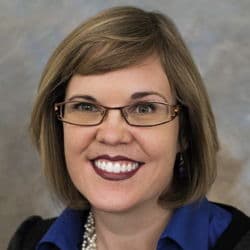
When Joanne Marshall, Associate Professor in the School of Education at Iowa State University contacted The Well, we knew we wanted to hear more from her. She offers a unique perspective as a tenured professor with expertise in public schools and work-life balance, with ethics and religion peppered throughout. I enjoyed my conversation with her immensely and hope you will as well. — Marcia
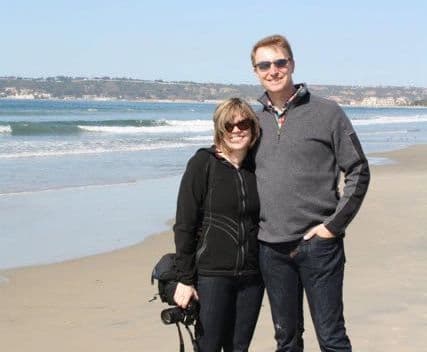
I met my husband there. My husband and I are the poster children for InterVarsity.
We met at an all-Boston area IV retreat. So Harvard, MIT, Tufts, BC, BU. I didn't really want to go because I had far too much work to do that weekend. But I was leading the Harvard chapter of the School of Ed. I thought, I have to go and be a good example. So I got in my small car with four small women and we drove off to New Hampshire. I happened to meet Stephen at that retreat.
I really wanted to know how to make changes. That was the question. So I ended up studying Educational Policy.
And I learned how policy works, and how politicians and power work. And I realized that policy is going to be really hard to change. There are too many constantly-moving variables. If you're going to change what goes on in schools, you have to change either teacher education and train better teachers, or leader education and get better principals, and if you do that, you can create an environment where teachers can do their jobs and do it really well.
I teach in the leadership preparation program at Iowa State University. I teach the social justice and diversity classes and the research classes, and a doctoral class on leading with ethics, spirituality, and social justice.
In terms of training school leaders, what I'm saying is, "Here are some things you might want to think about. Here are some questions that you might want to ask. Here are some tools. You can tell me how they work." We’re handing our students lots of different tools and training them to analyze the environment they end up in so that they use the right tools in it.
The emphasis of my research is the ways more traditionally “private” beliefs — like religion, ethics, spirituality, and work-life balance — get enacted in public schools.
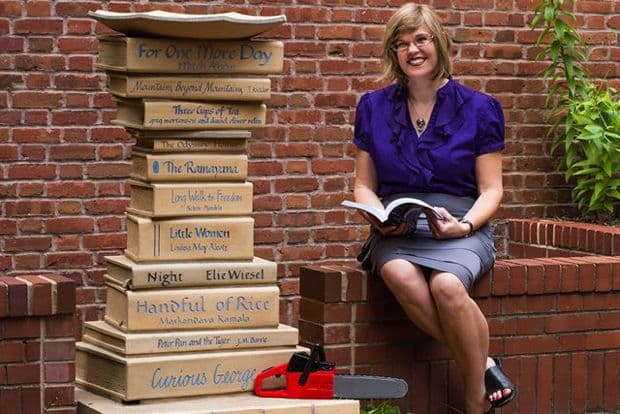
That was out of desperation when I attended my first national conference in educational leadership — with a five-month-old. I was trying to figure out how to go and present and be Miss Professional Doctor Smart Marshall and then go back to the room and nurse. And my spouse came with me, and nobody slept for pretty much three days. [Laughing]
It was awful! Our oldest was a premature baby, and he had to eat, and we had a lot of challenges. And I was trying to figure out, "How is this going to work? And how is everybody else doing this?"
My second child came along a couple years later. He was not a preemie, but it was still really hard. And I'm on an escalator one day at the same conference, and I look down the escalator and I see a couple of my colleagues who have small children. And I'm thinking, All right, they're making this work. They must be better at this than I am. So let's figure out what they're doing. So I put together a panel of these luminaries in my field from all over the country that I knew had children.
I just sent an email around saying, can you recommend some people? — and I want diverse perspectives if at all possible — so a variety of family configurations, regions of the country, ethnicity, gay, straight, adopted — whatever it is, I want to know what you're doing. And your job is to come and tell us one thing that you do that you think helps you in managing work and life.
So people came, and it was this extraordinarily moving panel. It created space for people to be vulnerable. I was fortunate that people were willing to do that, both men and women. And the session ends, and one of my colleagues asked me, "What was that session? People are coming out of there in tears!" I said, "That was the Work Life Balance session, and people were telling about what they do." He said, "I need to be part of that."
I found it fascinating because people were open about their experiences, and they wrote and talked about how this was such a different style of writing than what they normally do. And some of them bowed out at that stage, saying, "I just can't do this." Others talked about how surprisingly hard it was for them. And I got all this effusive feedback, such as, "I just had this big conversation with my husband that we've needed to have for years and we finally had it!"
After hearing these stories, I am impressed that any work gets done, because once I learn people’s stories, I'm thinking, "Really? You're doing that exceptional scholarship when you have this seriously debilitating disease, or you're caring for special-needs children, or your elderly mother lives several blocks away, what in the world? How are you doing this at all?" People are amazing.
Exactly. I am part of the Religion and Education Special Interest Group of the American Educational Research Association. A couple of us are trying to put together a book that would weave in that idea of call with work-life balance. And so I started a panel this year at the educational leadership conference again asking, "How does your faith relate to your academic life?" Again, I’ve got a great panel of people from diverse perspectives. People are looking for a common space to share and listen. I expect that to turn into another book.
It is now. We just re-organized so that the leadership department joined teacher education, so now it is more heavily female. In my former department, I was the only married woman with children for a long time.
Yes. In fact, many of my female graduate students and staff then would say, "Oh, you're my inspiration because you have children," and I would say, "You have got to be kidding. I cannot be your model! Don’t make me do that.” [Laughing] But I was the only one. The people that were married didn't have children. (This is exactly what Mary Ann Mason has found in her national study: women professors tend not to have children.)
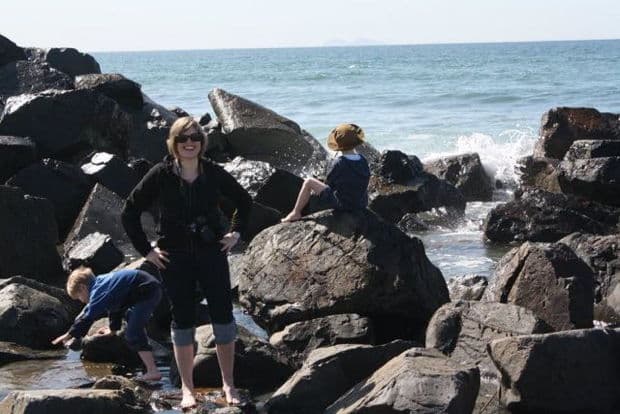
To hear more of Joanne’s interest in the overlap between personal and professional life, specifically dealing with religion and spirituality as they are implemented in public schooling, see this video at the Iowa State University website.
Tags:
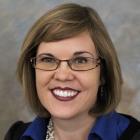
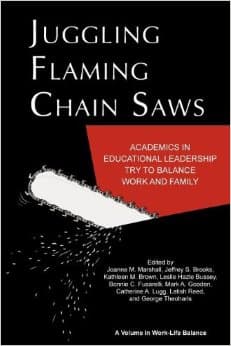
Joanne M. Marshall is a former high school teacher and a current associate professor of educational administration at Iowa State University. Her long-term research agenda is driven by the question of how people's internal values and beliefs relate to their public school roles, particularly in the areas of religion/spirituality, moral and ethical leadership, philanthropy, social justice pedagogy, and work-life balance. She holds an Ed.D. from the Harvard Graduate School of Education and has published articles in The Journal of School Leadership, Equity and Excellence in Education, Educational Administration Quarterly, The School Administrator, and Phi Delta Kappan. She is the lead editor of Juggling Flaming Chainsaws: Faculty in Educational Leadership Try to Balance Work and Family and editor of the Work-Life Balance book series from Information Age Publishing. More information is available at her website.