
Published 25 Mar 2026
Marked by Excess: Exploring a Lenten practice
by Karen Hice Guzmán
A blog post Women Scholars and Professionals

How can we find an antidote to the excesses in our lives? Karen Hice Guzmán describes the Lenten practices that have highlighted her journey toward balance.
My church does a good job of helping our faith community engage the seasons of the Church year. I particularly appreciate that we are invited to engage in the same spiritual practices as a congregation. Some are communal (like morning prayer once a week) and others can be done alone. A guide is provided for daily Scripture reading, reflection, and prayer. To help us enter into Lent this year, our pastor recorded a short podcast introducing the season and at one point, he said the following:
“...we live in a culture where it’s expected of us to feast all the time…as a society, we are marked by excess [my emphasis], having so much all the time at our disposal… we tend to feast without even thinking of it as a feast. It’s a new kind of baseline, of normal. Excess feels normal to us.”
Marked by excess. I’ve been thinking about these words. A lot. As I look at the culture around me and consider my own ways of living in the world, the word excess is uncomfortably fitting. Whether it is food, drink, possessions, media, or entertainment, over-consumption is, well, not “over,” but the norm. And in myriad ways it is making us less, not more. We learn to rationalize. We feed our over-developed desires for comfort, become hard to satisfy, and grow less content.
It’s not only our consumption that is marked by excess. Many of the systems and structures we live and work in judge us by our productivity. More is expected of us and we learn to demand more of ourselves and others. More work in the lab. More research done. More posters presented, papers published, and books written. Our sense of self worth and how we look at and relate to others is often tied to how much we have done or produced. We burn the candle at both ends hoping it will be enough.
This is not true for everyone, of course. But for most of us who live and work in and around academia, this is our reality. This semester, the Women Scholars and Professionals book club is reading Miroslav Volf’s book The Cost of Ambition: How Striving to Be Better Makes Us Worse. Volf writes that ambition (or one might say “excessive” ambition) motivates us to continually measure ourselves against one another, drives us to want to be superior, and finds pleasure in observing or assigning inferiority to others. Instead, he invites us to pursue excellence and in so doing we will discover contentment. It has been a challenging read with lively discussion!
Nevertheless, even a commitment to excellence can easily slip into an unceasing pursuit of more — more productivity, more acquisition, more of everything. But in the wisdom of Christians throughout the ages, we have at our fingertips an antidote to the excesses: fasting.
Fasting is one of the spiritual disciplines many engage as part of their Lenten observance. I have had mixed experiences with fasting myself, but thinking about it this year in the context of the idea of excess has been helpful. Rather than just thinking about fasting in terms of food (where excess is a bit more obvious) the invitation has been to look for excess, to ask hard questions about my observations, and then seek to limit or eliminate it. It has demanded attention and reflection. I’m trying to observe where I want more; where I think I need more. I pay attention to the situations where I get irritated if I have less or where I am not content. I am also beginning to see the places where I think I need to do more, produce more, or prove more.
So how has this played out for me?
With my awareness a bit heightened, I noticed almost immediately that I’d developed a little habit in the mid-afternoon— an M&Ms-and-almonds snack. I realized it had gotten to a place of a daily “I deserve this” — and when that happens, it’s no longer a treat. There’s nothing wrong with eating M&Ms, but it had moved past an occasional treat to part of my routine and that felt excessive. So I am setting it aside. I do enjoy them on Sundays, however, since they are feast days!
On the productivity side, I found myself in somewhat of a “forced fast” recently. An unexpected reaction to new medication meant I couldn’t care for my grandson. It was hard to tell my son and daughter-in-law I wouldn’t be coming. I felt I was letting them down, failing them. The next morning I ended up in the ER for 4 hours. While laying in the ER bed I kept thinking about how much work wasn’t getting accomplished! I realize that while I am adjusting to new medication I also have to adjust my expectations and be ok with resting, with stopping work, with doing less. And I am reminded of my mortality, the changes that come with aging, and the need to hold things more loosely.
Interestingly, but maybe not surprising, once I committed to the idea of paying attention to excess, I noticed that I began to experience problems with my belongings and my surroundings. The handle on the little kitchen vacuum broke off. I had to think, Can I get along without that handle? I decided that life would go on and I’d live without it for a while. Then, a ceiling tile in my son’s basement bedroom was noticeably wet and when removed we discovered the duct work above it was soaked. Hmmm, this is a bigger issue, but can it wait to get fixed? The duct work looked stable for now, but I’m keeping an eye on it. A few days later, I was using a store’s restroom. When I bent over to flush, the strap on my purse broke and the whole thing fell into the toilet. Seriously. Hmmm, I am definitely not going to keep using that purse … but don’t I have an old one in the closet? Usually my response would be to hop on the internet or call a repairman to replace or fix these things immediately, but I saw an opportunity to make due with less. I tossed the broken toilet-soaked purse in the trash and am carrying an old one I had in the closet. It’s not in the best shape, but it’s functional. The vacuum still works even though the handle grip is gone. It’s a bit awkward, but for a while we will use it. Plastic now covers the floor of the basement bedroom under the ceiling opening. There’s a bucket on the bed catching the drips from the duct work and my son is sleeping in the guest room. We’ve called someone to come look at it, but we are getting along fine while we wait.
Thinking about these things through the lens of excess makes me realize how privileged I am. And it has caused me to be honest about the connection I make between comfort and contentment. I am reminded with the words of the Apostle Paul in Philippians 4:
I know what it is to be in need, and I know what it is to have plenty. I have learned the secret of being content in any and every situation, whether well fed or hungry, whether living in plenty or in want.
As with other Lenten practices I have tried, I hope this one shapes me in helpful ways such that when we move into the next season, my way of being in the world is a bit more like I long for it to be — less obsessed with myself and my comfort and more generous with my time, talent, and treasure. How about you? What Lenten practices have you taken on this year and how are they shaping you?
I wrote previously about my own history with this season and a particular way I chose to engage in “I Gave Up Multi-Tasking for Lent.”
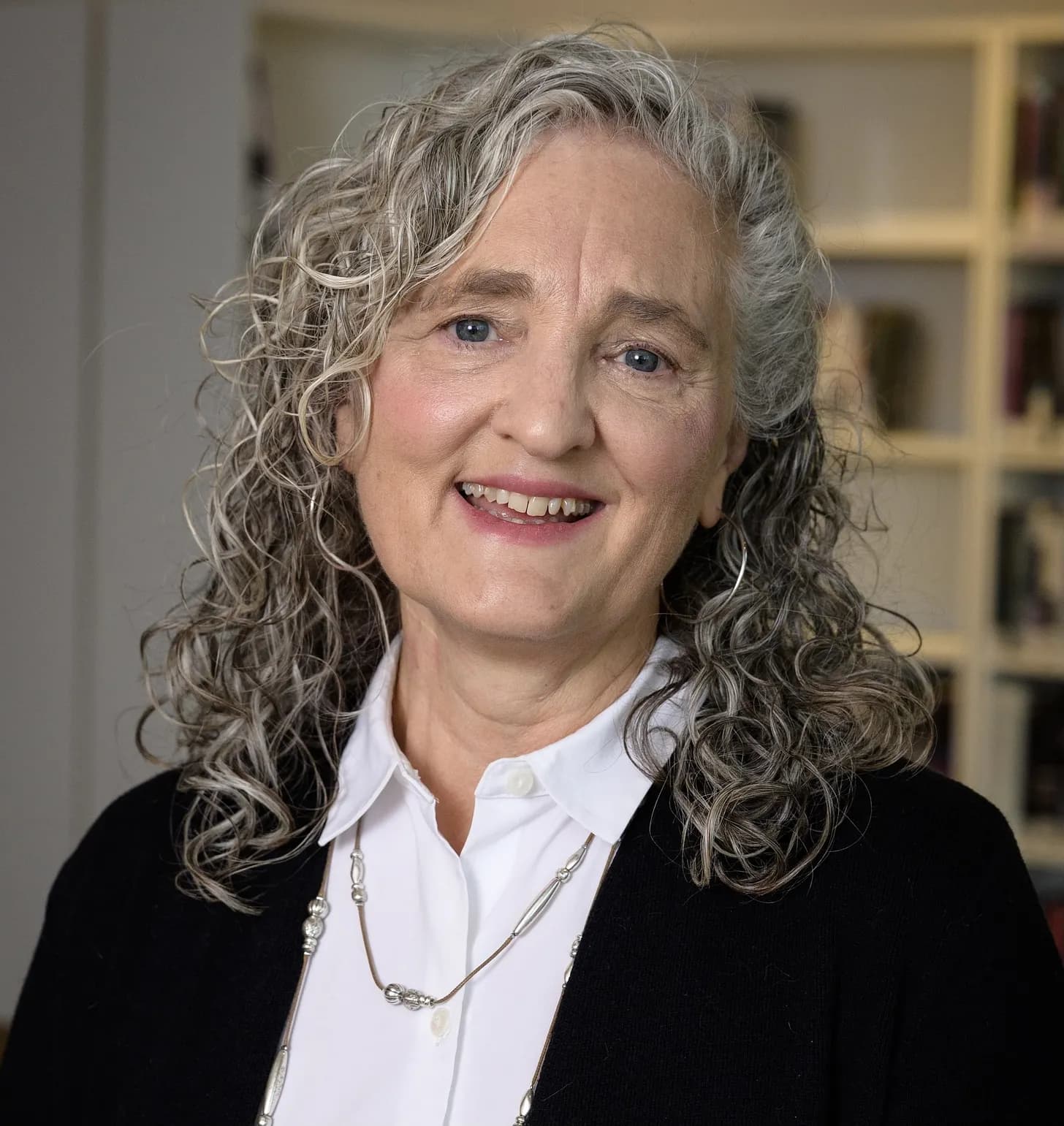
Karen Hice Guzmán is the Director of Women Scholars and Professionals. Except for some years taken off to raise children, Karen has spent her adult life in and around InterVarsity. She loves to use her gifts of hospitality and teaching to create a welcome place to connect with God and one another. Karen has a BS in Horticulture from Michigan State University and lives in Marietta, Georgia. She and her husband have three adult sons and a daughter-in-law. She loves dark chocolate, good coffee, and British TV.