
Published 26 Aug 2026
Notes From a Physicist Grandmother, Part 1:Living an Integrated Calling
By Catherine Hirshfeld CrouchA blog post Women Scholars and Professionals
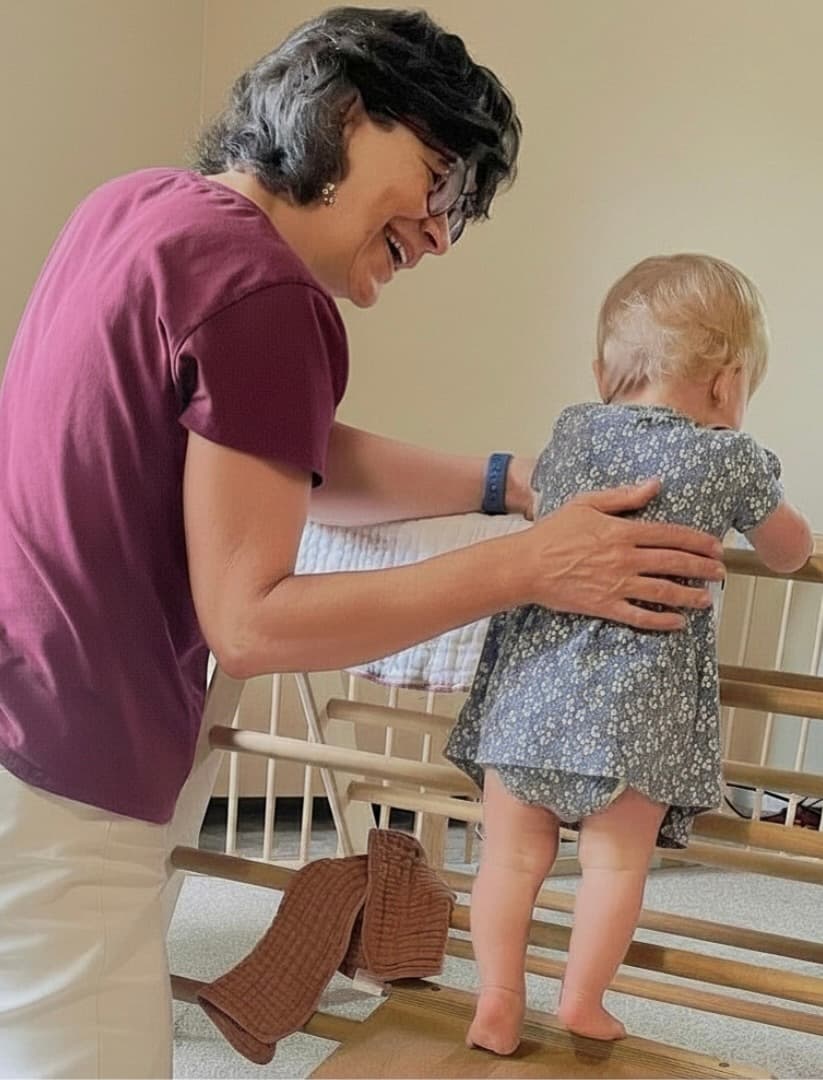
What does it look like to bring scholarly work and family responsibilities together into one (full!) life? Professor Catherine Crouch shares her story in this first in a series of four articles.
I am a Christian woman physicist, a college professor, and as of September 2025, a grandmother. All four of these roles—Christian, woman, physics professor, and grandmother—are central to who I believe God has made and called me to be. (Grandmother, by definition, indicates that I am also a mother, and I am deeply grateful to be a wife.) Those four roles aren’t often found in the same person, so I have spent most of my adult life following largely uncharted paths without knowing other women who have gone before me.
One of the things that comes with being an academic of grandmother age is increased opportunity and responsibility for mentoring younger faculty and would-be faculty. Recently, I’ve had the privilege of mentoring several groups of Christian graduate students and early-career faculty. For these aspiring scholars, both men and women, one of their most pressing questions is how to weave family, community, and academic work together into the vocation and life of a whole person. These younger scholars see few (if any) examples to follow—and some, especially women, wonder, “Is this really possible? Is it worth it?”
If you are wondering this today, I’d like to suggest the answer is, “Yes, but it takes careful intention and requires risk.” My encouragement to you is, therefore: be brave and be patient.
Let me share what this looked like in my own life—not as a template, but as an illustration and hopefully, as fuel for your own imagination:
I was married in 1994, halfway through my PhD in experimental physics. I hoped to become a professor at a small liberal arts college like the one where I’d been a student. I loved teaching and learning, and I had found Jesus while in college and subsequently found inspiration and encouragement from several Christian faculty who engaged with our student fellowship group. But even more important than eventually becoming a professor, I felt an eagerness and a clear sense of calling, shared with my husband Andy, to raise a family. This dual call into parenthood and academia guided us as my career began to take shape.
As an experimental physicist, I didn’t think caring for a baby while finishing the experiments for my dissertation was likely to be good for any of us (baby, Andy, or me). However, we did not agree with the well-meaning advice of many academics that we should wait until I had tenure to start our family. So when I reached the home stretch of my PhD in the fall of 1995 and was looking for a postdoc, I sought a position that would allow us to remain in the Boston area, and an advisor who would support maternity leave and part-time work.
Even today, when I tell people that this is what I was looking for, they are more than a little astonished that I found it. It was even more unexpected 30 years ago. When I walked into the HR office in November 1996 to arrange for maternity leave beginning in March, the warm, kindhearted woman who managed the postdoctoral positions said, “Hmm, I don’t think we’ve ever had a pregnant postdoc before.” But fortunately, she was deeply supportive, as was (much more importantly) my advisor. Both of our children were born while I was a postdoc—Timothy in 1997 and Amy in 2000—and I spent seven years in that research group, working part-time for most of it.
Andy continued to work full-time during that season, other than taking paternity leave when each of our kids was born, but his full partnership in parenting and keeping our home functioning was essential. Because my work time was more limited, if our kids or their caregiver got sick, he was responsible for taking care of the kids so that I could work my normal hours. We found a division of household chores that worked well for us: I usually cooked and took care of laundry, and Andy did most of the cleaning and paid our bills.
When Andy and I discerned that it was time for me to seek a faculty position, I only applied to jobs that were either in Boston (so that we could remain connected to our friends and community) or within a half-hour drive of family who could support us and participate in raising our children. My academic advisors warned me that applying to only seven faculty positions was risky. Fortunately, they were still supportive when I explained that those were the only advertised positions that I would be willing to accept. In the end, I was hired at Swarthmore College, and we moved there in the summer of 2003 with a six-year-old son and a three-year-old daughter, into a house located half a mile from my parents’ home.
Some might hear a simplistic message in our story: be faithful, and God will provide exactly what you want. But that view negates the challenges and complexities that accompanied this chapter of family and career. The move and my job were both God’s clear provision for us, and they were also costly. The chance for our children to grow up so near their grandparents was profoundly life-giving and meaningful beyond the practical help it provided. Nevertheless, the situation was not perfect, and we experienced many losses and frustrations along the way. When we moved away from the Boston area, we left numerous dear friends as well as a thoughtful, joyful small group that we’ve never replicated. We left a vibrant Christian academic and intellectual community and moved to a place where I, as a deeply religious faculty member, was a rarity. There were other Christian faculty in the Philadelphia area but finding them and forming meaningful connections was challenging and slow.
It was also hard as a working mother to find new friends, even through church. I loved the opportunities that Swarthmore provided to engage deeply with my students, but I was well past tenure before I really found my scholarly groove. The challenge of allotting my time between academic work and parenting was always there. While my children were in elementary school, I hated not being able to take snow days off with them, which was a keen reminder of the loss of time with my children that accompanied my faculty job. As for Andy, leaving the Boston area meant leaving the place that had been home since his teens and embarking upon a professional life of mostly remote work and travel long before this was common.
These years were also incredibly joyful. I loved all the different ways Andy and I got to be part of our children’s growth—inventing silly games with our toddlers, developing family rituals like Sunday afternoon tea (sandwiches, fruit and veggies, and treats mid-afternoon), being part of them learning to know and love Jesus, sharing music, poetry, history, and science with them, and even driving them to sports practices and music lessons. Those years were also professionally joyful and fruitful. I gained skill and confidence as a teacher and a scholar, developed a course that transformed the experiences of life science and pre-medical students taking physics, and mentored students in research, in my courses, and Christian students who sought guidance. And there were fruitful resonances across the dimensions of my life. I grew as a teacher and mentor as I learned from teaching and parenting my children. Students admired my desire to hold work and family together, which they saw in my daughter’s drawings and photos of my family on my office bulletin boards alongside scientific posters, and they brought me their questions about value and purpose as well as about physics.
Looking back, I’m happily amazed that we were able to creatively pursue our vision for family and professional vocation. I’m also grateful for the specific ways we were able to be brave amid the risks: I do not remember any fears about choosing either my part-time postdoc or my limited job applications, because I was confident that having more time for my children when they were small was worth whatever career compromises might come later. I was convinced that a thick set of relationships around our family was necessary for our children to have the kind of life we wanted for them. But even with that certainty, I remember the frustration of slow progress (even slower than the normal pace of research!) during my six part-time years and the fear that maybe I just wouldn’t get anything worthwhile done. That fear led to some poor decisions about projects, as well as a lot of unnecessarily long hours at work, and squeezing in extra work inefficiently from home.
Once I started at Swarthmore, we sought to offer our kids as simple and unhurried a life as feasible. We moved into a house that was within walking distance of campus, Timothy’s elementary school, and Amy’s preschool. Two days a week, I went home for several hours after the elementary school dismissed, then went back to work in the evening after dinner. In addition to my mother picking up the kids after school some of the other days, for two years Andy worked part-time to help with the transition to my full-time schedule. I followed excellent mentoring advice and said no to everything that was optional, staying laser-focused on my core responsibilities.
All of those rhythms and choices were good. Nonetheless, there was plenty of class prep, grant proposal writing, and lab setup that somehow took a lot more time than I had allotted to it. There were many hours awake in the middle of the night worrying I had missed my chance to contribute significantly and accomplish my sense of calling to academia. There were equally many hours wondering if I had made a colossal mistake not to just quit work until my kids were at least in middle school. I never had a mentor who had done anything like this, but if I had, I’m sure she would have gently pointed out to me that I am prone to worry, and perhaps one of the things God had for me to learn in this season was how to choose to set those worries aside. And she would have shared that this is hard, and learning to do so is the work of a lifetime. (Later in this essay series, I will share more on what I’ve learned about this over the last twenty years.) This was an opportunity to learn to be even braver.
Similarly, my part-time years especially could have been an opportunity to learn more patience. Those years were filled with the simultaneous boredom and delight of caring for Timothy and Amy as infants and toddlers. Although I did not regret my choice to work part-time, I remember the relief and joy of having a few hours each day to think about science and science education and to interact with adults I enjoyed working with. Simultaneously, I remember the grief of giving up time with my children to go to work. There was never as much time as we wanted to read out loud, play silly games, laugh together, comfort them, and, once the toddler years arrived, answer endless questions. Contemporary academia is fundamentally impatient. It is deeply countercultural to be patient with limitations and with the time it takes to do anything worthwhile.
I could not have done what I did without the full support and participation of my husband. As well as devoting extensive time to caring for our kids, he provided wise counsel and encouragement for me to pursue both motherhood and academic work throughout the pressure-filled years of being a working mom of young children. Although this is changing, I think it is still far more countercultural for men to substantially rearrange their professional lives than it is for women. And so, men, I encourage you as well to be brave and patient.
I’ve told my own story here to seed your imagination, but ultimately, discerning how you blend your vocations and family responsibilities must be highly individual. It will be informed by your circumstances, your opportunities, your gifts, and your calling. It can be easy to forget that vocational work is contingent1—it depends on your health, the needs of your family, whether you can meet your financial needs doing it, and many other factors. Consequently, it needs to be held lightly. “You do not even know what tomorrow will bring. . . . Instead you ought to say, ‘If the Lord wishes, we will live and do this or that.’” (James 4:14, 15) If you are married, this discernment will involve both your and your spouse’s intertwined lives.
In this essay series, I’ve focused on how I navigated both big vocational questions and practical challenges as a working mother. However, working mothers don’t have a monopoly on these types of challenges, and fathers and single adults may find even less support for deep commitments to family and community. For those of you who do not have children, whether single or married, male or female, I want to encourage you also to be brave and patient as you discern how God is calling you to share your life with community and family. I deeply admire my single and childless friends who have sacrificially cared for extended family members, their friends’ children, or vulnerable neighbors. (Our family benefited hugely from other adults who invested in our children’s lives!) I’ve watched friends take on primary caregiving for an older sibling in a health crisis; show up faithfully to a widowed friend’s children’s soccer games, music recitals, dance performances, and back-to-school nights; and be faithful, dependable volunteers and financial supporters for community-based ministries. Taking up such commitments, in whatever way fits your circumstances and calling, may be more countercultural and bear an even more striking witness than women finding creative paths to combine motherhood with academia. And doing so will also require being brave, and being patient.
In my next essay of this series, I will offer principles to guide your listening and your imagination.
[1] This observation comes from my husband Andy Crouch’s essay, The Three Callings of a Christian, which crystallizes a lot of his wisdom which has guided our shared and distinct paths.
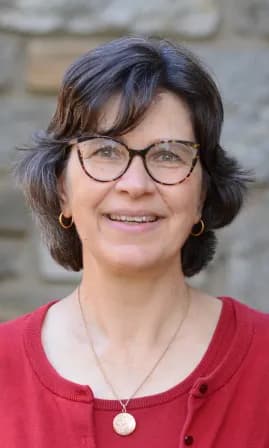
Catherine Hirshfeld Crouch is Professor of Physics and Department Chair at Swarthmore College, where she has taught since 2003. Trained as an experimental condensed matter physicist, she is an expert in pedagogical best practices for undergraduate physics education; her work on physics for life science and pre-medical students has received national attention and support from the National Science Foundation. In 2021, she was elected a Fellow of the American Physical Society for work spanning physics education research, curriculum development, pedagogy, and institutional leadership. She co-founded Swarthmore’s STEM Inclusive Excellence initiatives to expand support and resources for underrepresented and first-generation students in the sciences. She is a mentor to early-career Christians in academia through the Veritas Scholars program, and serves on the Board of the John and Vera Mae Perkins Foundation. Crouch earned her PhD at Harvard University and worked with Eric Mazur as a postdoctoral fellow. She is married to Andy Crouch and together they are the parents of Timothy and Amy, parents-in-law of Sophia, and grandparents of Miriam.
Catherine Hirshfeld Crouch is Associate Professor of Physics at Swarthmore College, where she has taught since 2003 and was awarded tenure in 2009. Dr. Crouch has extensive expertise in both the optical properties of nanoscale materials and pedagogical best practices for college and university science. She earned her PhD. at Harvard University and continued at Harvard as a postdoctoral fellow with Eric Mazur until beginning her position at Swarthmore. She has published more than thirty peer-reviewed research articles and regularly involves Swarthmore undergraduate students in her work. She has also spoken and written about the intersection of faith and science in a number of settings including the Q conference and InterVarsity’s Following Christ conference for graduate and professional students. She is married to Andy Crouch and together they are raising their children Timothy and Amy.