
Published 9 Sep 2026
Notes from a Physicist Grandmother, Part 3: Sustaining the Call
By Catherine Hirshfeld CrouchA blog post Women Scholars and Professionals
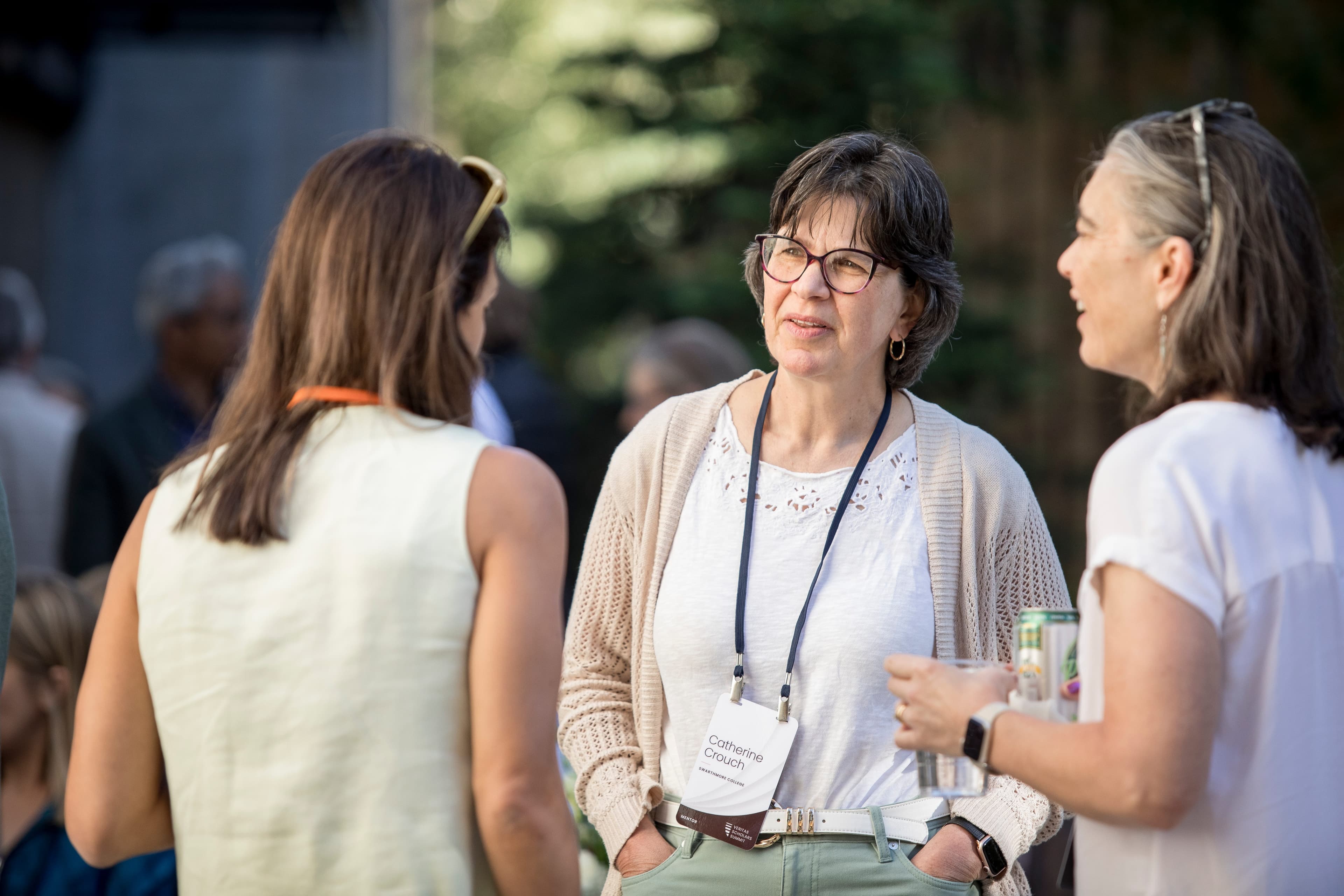
What resources and habits are needed to make life, with the complexities of our call(s), sustainable over the long haul? Professor Catherine Crouch offers her suggestions in this third in a series of four articles on an integrated life.
In the previous two essays, I’ve shared my story and encouraged you to be brave and patient as you pursue your own callings. This is not original advice. Patience and courage—ultimately derived from wisdom, faith, hope, and love—have been cultivated by Christians across cultures and circumstances for millennia, and the church offers rich guidance for how to pursue a life of faith. However, contemporary academia poses some particularly acute and idiosyncratic challenges for Christians, and although everyone’s story is unique, there are a few questions I’ve been asked repeatedly, all of which I believe are aspects of “how do I sustain doing my academic work as a Christian calling?” In these final two essays, I offer some of my responses to those questions.
I feel very isolated; I often don’t know where to turn for guidance navigating my work as a follower of Jesus. How did you deal with this?
Yes, isolation is a very real experience. I had very little mentoring from senior Christian academics, and for many years, I had very few Christian peers, but looking back over the last 40 years, I can see that the Lord provided what I most needed when I needed it, though I didn’t always recognize it at the time. Nonetheless, there were many times I felt acutely lonely.
While I was a PhD student, although I lacked a Christian senior mentor, I had the amazing gift of many fellow students who were also seeking to follow God in their work, some of whom also worshiped in the same local congregation. One put together a discussion curriculum on faith and science for all of us in the sciences. Another shared my commitment to service in low-income communities and we had many conversations about navigating the tension between our insular lives in the lab and the needs of the world around us. And in spite of the many ups and downs that come during that stage of life, and though we are now dispersed across the country, I am grateful to count many of them still as dear friends. (I sent drafts of these essays to several of them for their feedback.) So my first mentoring recommendation is: don’t underestimate how much you can learn from peers who are journeying alongside you, and from reading and discussing good books.
Once I started at Swarthmore, however, I no longer had a local community of either peer or senior Christian scholars. When I found myself at a particularly challenging point the year before applying for tenure, when I had some key research decisions to make and was fearful about my prospects for success, I thought of one of the senior faculty who had taught me at Williams College, who was also a Christian. Although I hadn’t interacted with him much around faith when I was an undergrad, we had briefly reconnected when I had given a talk at Williams while I was a postdoc, and I had been reminded of his wisdom and leadership. I figured he would at least understand the professional situations I found myself in, so I scheduled a phone call with him (this was pre-Zoom) to talk about my research concerns and questions.
Stuart listened patiently while I explained the situation I was worried about with my research. Then, the first question he asked was: “Catherine, how is your life with God right now?”
After we talked about that for a bit, he returned to the topic of the research dilemmas. “Do you need this paper submitted soon for tenure?” Yes. “Do you have enough done that you can submit it for publication, even if it isn’t perfect?” I said I didn’t feel confident in how to judge that. “Well, is there someone in the field that you can trust enough to share unpublished work with them, who you can ask to read it and help you evaluate if it’s a worthwhile contribution?” I thought for a few minutes, and realized that actually, there were several such people.
At the end of this call, I didn’t magically feel at peace. But I knew I had received excellent advice, I knew what to do, and equally importantly, I had been reminded that my life with God was not peripheral to my work, but in fact was central.
As Stuart was neither nearby nor did we attend the same professional conferences, I didn’t get to interact with him frequently. This particular mentoring conversation was one of only a handful over many years. I would have loved to have more regular mentoring from someone nearby, but like the manna in the wilderness, it was enough.
If you are in a similar situation and lack a local community that can mentor and support you, which is more the norm than the exception, I encourage you to make the most of more distributed communities. In about my tenth year at Swarthmore, post-tenure and when my kids became old enough that I could do a bit more discretionary travel, I visited some grad school friends who were also Christian academics. It was a powerful reminder of the community that had once surrounded me, but which I now lacked. When they asked me how things were going, I said “My work is going really well, and our kids are wonderful, but I really feel like I’m in exile,” and couldn’t hold back the tears. But the time we had together on that visit proved to be a profound encouragement that was part of sustaining me through that season.
Overall, during my PhD, postdoc, and early career years, I learned and was guided by many peers (and books); some senior women scientists who were not Christians, but who shared their experiences as women in the physical sciences and navigating motherhood while working full-time; some senior men, some of whom were Christians and some who weren’t; and other mentors who were not in academia. More recently, as I’ve become part of national mentoring networks, and gained a couple of local Christian colleagues, I have felt more connected.
My experiences are congruent with current mentoring best practices: most people benefit from having multiple mentors who can each address different aspects of any individual’s unique situation. Although academia is traditionally structured around having a single academic advisor, the profession is coming to recognize that even within our academic work, there are huge benefits to receiving input from multiple senior faculty. So, I encourage you to draw on mentoring wherever you see God providing it.
How do you continue to take joy in your scholarly work?
Remaining joyful and being patient are both rooted in trusting God. To do so in the face of discouragement and intense demands requires remembering that everything we have is a gift, including our abilities and our thoughts, and therefore our academic work. This is in direct conflict with the messages our secular scholarly communities send, in which we deserve both all the credit and all the responsibility for our ideas and abilities.
It takes intention and practice to internalize the truth of being the recipients of immeasurable gifts. Over time, I have learned from others or developed practices that help me remember and live out that truth in my work specifically. I will share just a few of them.
There are many rich and beautiful prayers that have been composed by scholars to precede academic work, such as the Ante Studium prayer of Thomas Aquinas. I try to arrive at my office early enough to have a minute for silence and then pray for my work before launching into work—although I struggle to remember to do this, even just at the start of any extended time of focused work with no meetings! Most recently I have found Tim Keller’s version of John Calvin’s Prayer Before Work or Study particularly helpful, in part because a group of Christian faculty that I’m part of uses this to begin our meetings.
I also try to build in practices that help me do my work lovingly. Part of doing my work lovingly is doing it well; another part is to contemplate the thing we study just for the love of it, to remember how astonishing or beautiful or wondrous it is, and to give thanks for it. It is easy to lose sight of doing this, and I often forget to do this in the summer when I’m focusing on scholarly projects; I know others who put a time for this each day on their calendar, or make a practice at the end of the workday or when traveling home of giving thanks for what they studied for its own sake, as well as for the work they did. I have personally found teaching to be the practice that most helps me do this. Expressing joy, wonder, and delight at what we are studying adds to the joy and energy in the classroom and many students have told me how much they appreciate this.
For a scientist, this falls in a long tradition of approaching scientific work so as to give praise to God for his creation. James Clerk Maxwell, a 19th century physicist who developed a theory of electromagnetism from the careful experimental work of Michael Faraday, had Psalm 111:2 (in Latin) carved over the doors of the Cavendish Laboratory in Cambridge, England: Magna opera Domini exquisita in omnes voluntates ejus, of which one English rendering is, “Great are the works of the Lord, studied by all who delight in them.” [1]
A final aspect of doing our work lovingly is to love the people who are part of it. As faculty at an all-undergraduate college, a big part of my job is teaching and advising students. It is easy to become preoccupied with whether my students think I am a great teacher. My discipline to resist this is to make a practice of praying for my students as I travel from home to work each day and as I walk from my office to my classroom. (I also try to arrive in my classroom with a few extra minutes to pray for the students there, but sometimes I am just not organized enough!) Doing so helps me shift a little bit from seeing students as judges of my worth or problems to be solved, but people who are loved by God, and who I can express that love to through our class.

As a scientist, how do you deal with the intrinsically competitive nature of STEM research? How do you bring a Christian posture to this but also achieve success?
There is no getting around the fact that there are limited resources for doing science; there are a limited number of jobs, and even once in a position, not everyone can be funded to do everything they want to do. It is also absolutely the case that some of our colleagues cannot be trusted with unpublished research results and I strongly recommend being wise about whom you trust. Nevertheless, I think a deep brokenness of the scientific enterprise is how the combination of limited resources and human fallenness has made it more about achieving glory than understanding God’s amazing creation, and using those insights to steward it and care for our fellow humans.
I think we as believers have to seek ways to creatively and wisely promote a greater posture of collaboration within our spheres of influence. One spiritual discipline I’ve found to be essential is choosing to take joy in the scientific discoveries and accomplishments of others in your field. Whenever I read other people’s research that is really good—whether work that is groundbreaking or solid, careful work that provides another piece of understanding to the community—I try to remember to pause to give thanks to God both for that work, and for the people who did it. And then, whenever I have the opportunity in conversation with colleagues or in presentations at conferences, I do my best to appropriately highlight the work of others as well as my own. For me, these practices are essential in resisting the reaction I commonly had as a pre-tenure faculty member (and sometimes even now), which is to feel threatened: Is my own work as good as theirs? Will my own work get less attention because of theirs? Am I diminished by their accomplishments?
In pre-tenure years there seem to be obvious reasons to be fearful of others’ accomplishments, but I am convinced it’s critical to choose this supportive, celebratory posture toward others’ work from the start, both because it becomes ingrained over time, and because it will be more believable to others if it has been there all along. After choosing (though imperfectly) to celebrate others’ work throughout my professional lifetime, both privately in my prayers and study time, and publicly in conversations with colleagues, I can now see I have received the fruit of being viewed by my peers as honest, trustworthy, and fair, and my own career has benefited.
How do you manage setbacks and disappointments in your career and family life?
Yes, scholarly work always involves setbacks and disappointments, and we are not immune to them as Christians. There are no easy answers but instead, only learning to trust God that we are never forsaken and that in the new creation, all will be made right (Revelation 21:3-5). (One Christian friend who is engineering faculty at an R1 university says, “I don’t know how people who aren’t Christians handle this job—without God it would be way too scary!”)
Because we live in a fallen world, all of us will face toil, hardship, disappointment, and loss, regardless of how much we love our field and our work. Regardless of how excellent is the work you can do, and how carefully you plan, sometimes your goals will be thwarted or only partly accomplished, sometimes due to your own brokenness and failings, sometimes due to others’, whether from neglect or active opposition, and sometimes due to broader circumstances—for example, many of us experienced profound scholarly setbacks during the Covid-19 pandemic. Although some of these experiences will just be minor frustrations, others will involve profound losses. Grieve those hardships while you are in them, and the losses once they are clear. However, grieve with hope. The psalms of lament begin with blunt honesty to the Lord about the writer’s circumstances, and almost all end with an affirmation of the Lord’s past faithfulness and the writer’s trust for the future.
I think many academics struggle particularly with the fallenness of the world, because we analyze things for a living, and this can make us want to understand everything that happens to us. Sometimes we need to content ourselves with the mystery of God’s presence in our lives not always seeming to provide for us as we feel we need, as well as remembering that we don’t always understand God and he is greater than we are. This has been a long struggle of mine. I have found it helpful to learn contemplative prayer practices, such as praying the Jesus Prayer and other single-phrase prayers, and practicing silence in God’s presence.
How do you sustain your faith for the long haul as an academic?
Much of what it takes to sustain and grow in faith is no different than for believers outside of academia—practices of prayer, grounding in Scripture, participating in community, and serving others sacrificially. Nonetheless, for students and faculty alike, I’ve repeatedly found that one of these practices stands out as particularly countercultural, and thus is perhaps most prone to being viewed as unrealistic, but one that has been critical for sustaining my faith as an academic: keeping the Sabbath. In my next and final essay in this series, I will share my experience with the Sabbath and share a list of books I’ve found helpful for spiritual formation, including Sabbath keeping.
For more from Catherine Crouch, read the first and second articles of this series.
[1] For a more detailed description, along with the story of how the English text (Coverdale translation) of Psalm 111:2 came to be inscribed over the doors of the new (1973) building, see this article from the Faraday Institute for Science and Religion.
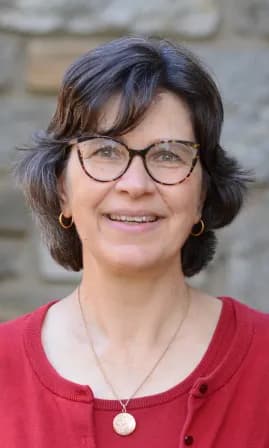
Catherine Hirshfeld Crouch is Professor of Physics and Department Chair at Swarthmore College, where she has taught since 2003. Trained as an experimental condensed matter physicist, she is an expert in pedagogical best practices for undergraduate physics education; her work on physics for life science and pre-medical students has received national attention and support from the National Science Foundation. In 2021, she was elected a Fellow of the American Physical Society for work spanning physics education research, curriculum development, pedagogy, and institutional leadership. She co-founded Swarthmore’s STEM Inclusive Excellence initiatives to expand support and resources for underrepresented and first-generation students in the sciences. She is a mentor to early-career Christians in academia through the Veritas Scholars program, and serves on the Board of the John and Vera Mae Perkins Foundation. Crouch earned her PhD. at Harvard University and worked with Eric Mazur as a postdoctoral fellow. She is married to Andy Crouch and together they are the parents of Timothy and Amy, parents-in-law of Sophia, and grandparents of Miriam.

Catherine Hirshfeld Crouch is Associate Professor of Physics at Swarthmore College, where she has taught since 2003 and was awarded tenure in 2009. Dr. Crouch has extensive expertise in both the optical properties of nanoscale materials and pedagogical best practices for college and university science. She earned her PhD. at Harvard University and continued at Harvard as a postdoctoral fellow with Eric Mazur until beginning her position at Swarthmore. She has published more than thirty peer-reviewed research articles and regularly involves Swarthmore undergraduate students in her work. She has also spoken and written about the intersection of faith and science in a number of settings including the Q conference and InterVarsity’s Following Christ conference for graduate and professional students. She is married to Andy Crouch and together they are raising their children Timothy and Amy.