
Published 9 Dec 2008
Voices: Hillary Prag
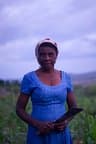
Putting cameras in the hands of displaced Haitians is a passion for documentary photographer Hilary Prag.
By Hillary PragA blog post Women Scholars and Professionals
In this regular feature at The Well, we hear the stories of women seeking to follow Christ in the university and professional worlds.
A Voice at The Well: Hillary Prag
Current location: Port-au-Prince, Haiti
Area of study: Documentary Photography

I just graduated with a Master of Arts in International and Intercultural Communication from the University of Denver. I’m now in the process of researching NGOs that are involved in the post-hurricane relief effort in Northwestern Haiti. I’m hoping to discover a way to combine documentary photography with trauma therapy for hurricane victims. Cameras in the hands of displaced Haitians will be used to not only document their grief and suffering, but also to encourage agency as they exhibit their recovery process, recording what they are doing to rebuild their lives.
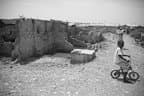
I’ve been a documentary photographer since high school in my own way, but it wasn’t until documentary photographer Zana Briski won an Oscar for Born Into Brothels that I discovered I could combine my love for at-risk youth with my love for photography. Since then, I have been designing photography education programs that allow youth to move from feeling like victims of an unfair system to actors in their own recovery. A summer spent working for the Mennonite Central Committee in Haiti turned me on to doing this kind of work for traumatized individuals following the recent series of hurricanes.
I most enjoy the look on a student’s face when they see their work hanging in a gallery for the first time. Secondly, I enjoy watching a student’s face when they see their lives flashing before them in 4×6 inch prints. I can almost see them thinking about changes they want to make in the way they walk around in the world. Photography can be a mirror that we use to see where our decisions have taken us and from there decide if it looks good or not.
I feel the bright dancing delight of God in the eureka moments when young photographers take pride (some for the first time) in something they’ve created. It feels like putting my fingers on the pulse of someone’s joy.
The challenge for me has been to allow myself to count this as a vocation, to recognize that my life’s work can be that which makes me come alive, even if it doesn’t seem lucrative or industrious. As an academic in the social sciences, I struggled to justify the kind of work that fell under the label of the arts. It didn’t seem rigorous enough by academic measures. I have been challenged to believe that I’m loved independently of how many difficult and rigorous obstacles I’ve overcome.
Throw parties. I once thought I wanted to be a New York City wedding coordinator, but then decided there are occasions for celebration all around me. Even dinner with a friend can be an event. I love entertaining people.
Is it worth trying to make money doing this or is it better to get a day job?
I would like to be a consultant for international organizations interested in community development work that uses the arts to access otherwise unarticulated stories and information. I would like to have a series of trauma therapy programs around the world that use techniques such as documentary photography to help individuals take ownership of their own recovery process. I would love to be teaching others how to do this work in their own customized way.
Photos by Hillary Prag.
Tags: